
There are few countries on earth that are as passionate about football as Argentina. The three-time World Cup winners have produced some of the greatest players ever, with Lionel Messi, Diego Maradona and Alfredo Di Stefano right up there in the all-time rankings.
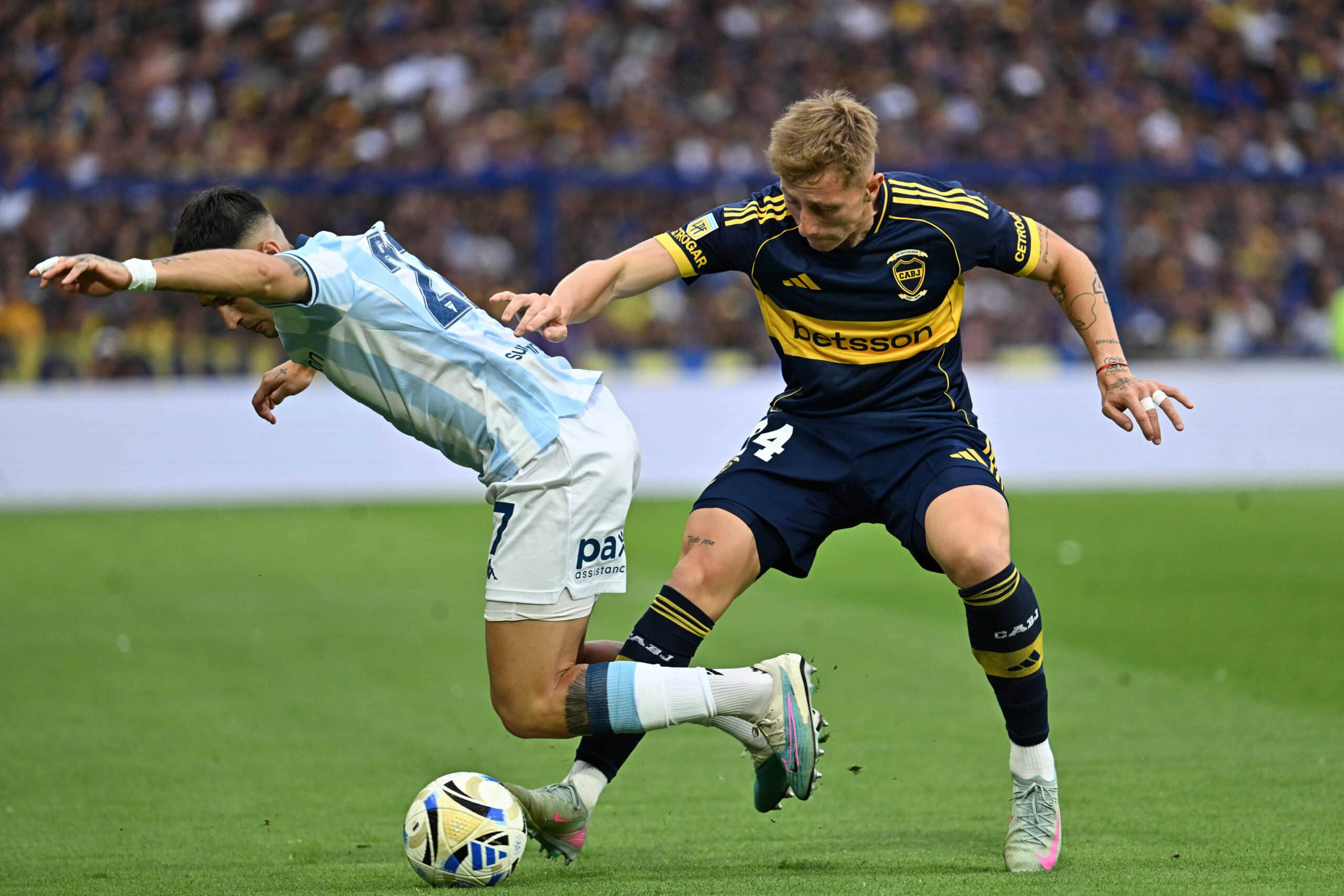
It is not all about the national team, however. The domestic scene in Argentina is among the most vibrant in the world. Two of the biggest teams in the country, Boca Juniors and Racing Club, are used to competing with each other for trophies. Here is the story of the rivalry between this pair of giants.
Roots of the Rivalry
Most countries have a group of elite clubs, albeit with different degrees of entrenchment. In England over the last decade or so, the talk has been of a big six (Arsenal, Manchester United, Chelsea, Manchester City, Liverpool and Tottenham Hotspur). Italy has a big three (AC Milan, Inter and Juventus) and Spain has a big two (Real Madrid and Barcelona). Germany and France arguably have a big one (Bayern Munich and Paris Saint-Germain respectively).
In Argentina, there is the Cinco Grandes - the ‘big five’. The term was coined way back in 1937 to describe Boca Juniors, River Plate, Racing Club, Independiente and San Lorenzo, the dominant forces in the Argentinian game. Not only are they the country’s five most successful clubs, but they are thought to have the loyalty of a combined 86 percent of football fans in Argentina.
Racing Club were founded in 1903. Two years later they joined the Argentine Football Association, paving the way for them to compete in official tournaments. In that same year, 1905, Boca Juniors were founded by the sons of Italian immigrants. That makes Boca the second-youngest member of the big five.
Boca are located in the city of Buenos Aires, while Racing are part of Buenos Aires province. Their home is in the city of Avellaneda, but the current stadiums of both clubs are just five kilometres apart. Boca’s sworn enemies are River Plate and Racing’s chief adversaries are Independiente, but there is still a competitive rivalry between this pair.
The first high-profile meeting between Racing and Boca took place in 1910. Both teams were in the second division back then, and they faced off in a promotion play-off to decide who would win promotion to the Primera Division. Racing triumphed 2-1 in front of 5,000 spectators at the Estadio GEBA.
Narratives and Characters
While discussions about Argentinian football focus on the big five, that group can arguably be subdivided further. Take a look at the number of titles won and it is clear that two teams have outperformed the other three throughout history. River Plate have been crowned champions 38 times and Boca Juniors have won the league on 35 occasions. There is then a substantial drop to Racing Club (18), Independiente (16) and San Lorenzo (15).
Because of this, whenever Boca Juniors and Racing Club go head-to-head, the latter take the role of underdogs - almost regardless of their respective positions in the league table at the time of the match. A consistently dominant force in terms of trophies won, Boca’s image as the bigger club is also boosted by its location in the city of Buenos Aires itself.
Racing do not mind presenting themselves as outsiders in this particular fixture, though. In fact, their fans relish it. There is a degree of resentment towards both Boca and River Plate, the two biggest powers in Argentina, while Boca supporters hate losing to a club they treat a bit like a little brother.
As you would expect for two clubs that have existed for more than a century, Boca Juniors and Racing have their fair share of legends. Juan Roman Riquelme, Carlos Tevez and Martin Palermo are among the icons adored by the Boca crowd even years after their retirement. For Racing, Diego Milito, Ruben Paz and Juan Jose Pizzuti have a special place in the hearts of supporters.
Fan Culture
Argentinian fan culture is among the best in the world. Supporters throughout the country live and breathe football, and virtually every match is a colourful, vibrant occasion. The atmosphere inside stadiums is up there with anything you will find elsewhere: fans sing inventive songs for 90 minutes, with flares, banners and confetti only adding to the scene. There is no such thing as a quiet ground in Argentina.
Supporters of Boca Juniors, Racing Club and other Argentinian teams are loyal. Fairweather fans exist, but they are much less numerous than in other countries. Even when things are going badly for one of the big five, their stadiums usually sell out. Argentinian fans support their team through thick and thin.
It is not all positive, though. Organised fan groups, known in Argentina as barra bravas, have been known to cause trouble. As well as links to violent behaviour on the terraces and elsewhere, some of these groups have been accused of profiting from ticket sales and intimidating players and staff. Because of safety concerns, away fans have often been banned from attending matches. That is a real shame, but it is usually a necessary precaution.
Boca Juniors are traditionally associated with working-class, immigrant communities in Buenos Aires, principally around the La Boca neighbourhood. Racing Club fans have built an image centred on the idea of suffering, based on events such as their relegation in the 1980s and their failure to win a league title between 1966 and 2001. Like Boca, Racing have working-class roots.
Defining Derby Moments
That aforementioned promotion play-off between Boca Juniors and Racing Club in 1910 was the first important meeting involving the two teams. Racing won and went on to dominate the Argentinian game over the next few years, winning the league title in 1913, 1914, 1915, 1916, 1917 and 1918. But Boca began to compete towards the end of that period, triumphing in 1919, 1920, 1923, 1924 and 1926.
There have been several seasons where Boca and Racing were in direct competition for honours. In 1950, Racing won the title and Boca finished second. That is exactly what happened again in 1958, but the boot was on the other foot in 2022 when Boca were crowned champions and Racing finished as runners-up. The gap between them was only two points, so had Racing beaten Boca in a head-to-head clash, they would have won the league all else being equal. As it happened, that game finished 0-0.
That same year, Boca and Racing fought each other for another trophy, the Trofeo de Campeones de la Liga Profesional. It was an astonishing game. Both teams had a player sent off in second-half stoppage time with the score 1-1. Extra time followed, with another Boca player sent off before Carlos Alcaraz scored for Racing in the 117th minute.
He celebrated provocatively in front of the Boca fans, and all hell broke loose. Alcaraz was sent off, but that was not enough to quell Boca’s anger. In stoppage time at the end of extra time, the referee showed seven more red cards - bringing the total for the whole match to 10.
The Rivalry Today
There is no debate about the biggest game of the season for either Boca Juniors or Racing Club. Boca are preoccupied with River Plate, with the two clubs sharing what is perhaps the fiercest rivalry in world football. Racing’s mutual enmity with Independiente is less well known abroad, but any game between them is always a huge occasion within Argentina.
While Boca vs Racing is not the most important match in the calendar for either team, it is still a big deal. There have been some heavyweight clashes between the pair down the years, and with Boca and Racing among the five traditional giants in Argentinian football, there are bound to be future games which help to decide the destination of silverware, either directly in a cup final or indirectly in a league campaign.
At the time of writing, Boca’s most recent success in the Primera Division was in 2022, while Racing have not been crowned kings of the country since 2018/19. Boca are six-time Copa Libertadores winners and finished as runners-up in 2012, 2018 and 2023, while Racing have not been South American champions or even reached a final since 1967 - their sole triumph to date.
Boca Juniors vs Racing Club is not right at the top of the list of Argentinian football rivalries, but if you have the opportunity to attend a game between these two historic clubs, it would be a mistake to pass it up.