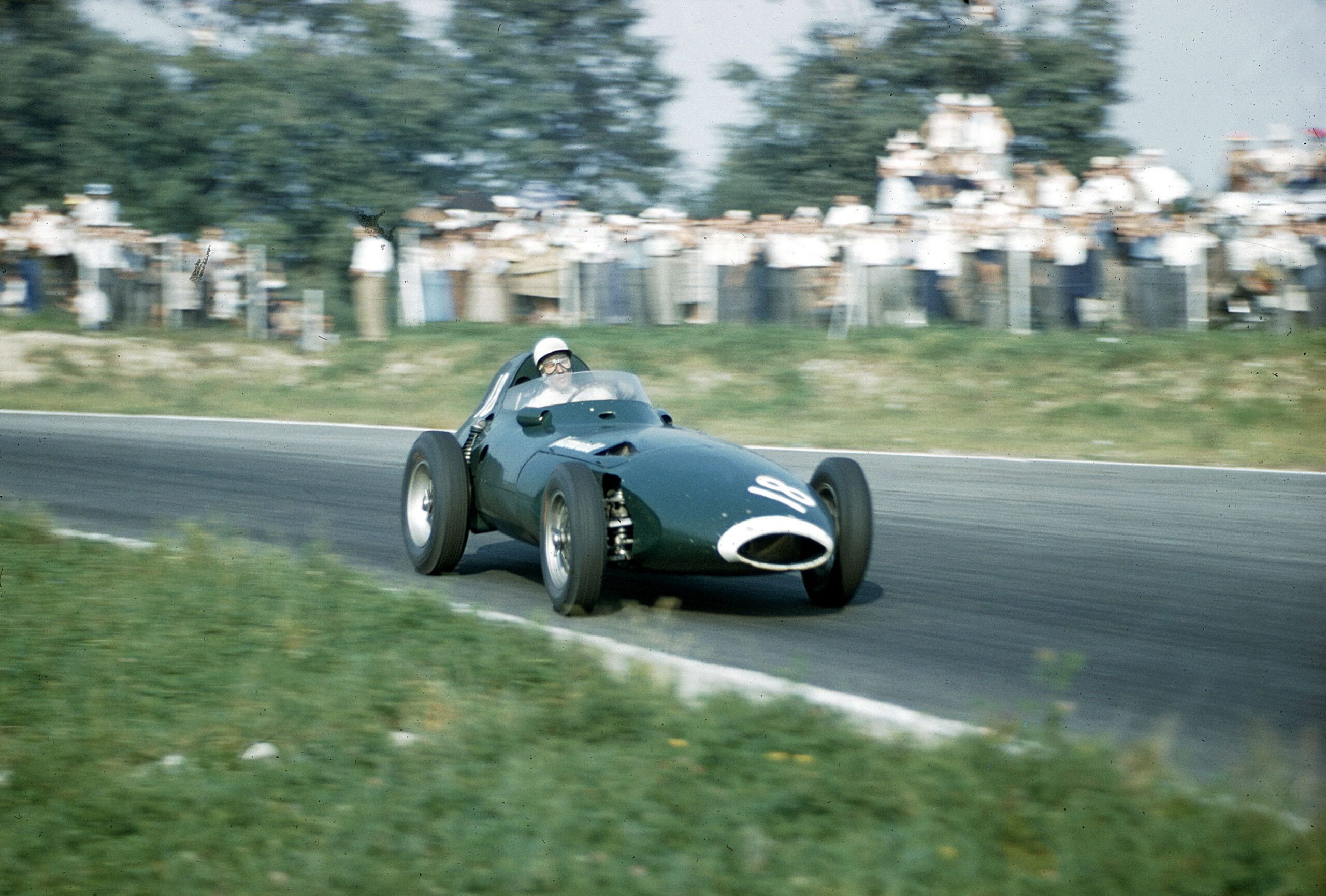

Formula 1 is one of the world’s biggest global motorsports. When thinking of automotive racing, most people will think of F1 over things like the WRC, Moto GP, WEC, and NASCAR.
A global population has continued to follow the sport over the last 75 years it has been active, with it having continued to grow from what was traditionally a European racing concept into a truly worldwide event.
Throughout the years, the sport has managed to get bigger and better. While technology has played its role in helping cars to become quicker and slicker through the turns, drivers have excelled and become more skilled than ever before. The enhanced competitiveness has led to increased betting opportunities, with the F1 markets being among those that are most enjoyed on race weekends.
However, that’s not to say that the sport hasn’t had some of the best since the very beginning, because it has. Many of the world’s best drivers have competed in the sport, which is why it has been part of the global attraction that fans and bettors have with it, and a reason why the motorsport has been able to grow into various markets.
As of 2025, races are held across five continents, with seasons getting longer due to the expansion. Several racetracks have become synonymous with the sport, with some being more iconic than others. More on these many aspects later, though.
We’re going to dive into the history of the sport and provide you with everything you need to know. In doing so, you’ll have a greater understanding of how it has risen to the top and what has made it an activity that is loved by millions worldwide!
The Birth and Expansion of Formula 1
Starting at the very beginning, F1 racing first emerged in the early 20th century when races (known as Grand Prix) were being held across Europe. They were unlike what we can see today, as they took place on public roads and not on closed tracks around specific race circuits.
These events featured manufacturers like Alfa Romeo, Bugatti, and Mercedes-Benz in the formative years, but were joined by many others in the years to come. It wasn’t until the post-Second World War period that things really picked up for the sport, and it began to grow into the phenomenon that it is today.
In 1946, the Fédération Internationale de l’Automobile (FIA) established the "Formula One" regulations that pertained to the rules about competitors' cars. They would define certain specifications that had to be followed to ensure a fair competition. These would involve the car’s weight, the engine size, and other specifics of a vehicle. In doing so, they created a uniformed racing event, which would become known as Formula One.
The first race took place at Silverstone, England, and was the inaugural race of the maiden FIA Formula 1 World Championship when it started on May 13, 1950. Races would then take place around Europe, with the UK, Italy, France, and Monaco being among the first. Seven races took place in the first season, which had included the Indianapolis 500 in America (although they had separate rules). Giuseppe Farina was driving an Alfa Romeo when he won the season.
Today’s Formula One
From that point on, the sport continued to grow. It became huge as interest grew alongside it. Commercial deals and sponsorships started to emerge, which helped boost fan interest because of the greater exposure. In the 1980s, it was common for races to be held on a more global scale, as new continents like North America, Asia, and the Middle East began to host races alongside Europe.
Technology also played a role in helping to transform the sport from its modest and humble background into a global phenomenon. Cars got significantly better, allowing drivers to do things that they weren’t able to do in the years before. New equipment and methods were introduced that enhanced the competitiveness of the sport, with pioneering advancements like aerodynamics, turbo engines, and hybrid power units becoming standard components of a race car. A race car would also go on to become another form of advertising for organizations, as they could reach new audiences in new markets.
Of course, the sport benefited from the technological advancements TV enjoyed. Races were being broadcast into the homes of people worldwide, allowing them to watch the action unfold wherever it was taking place. As more eyes were on the sport, the greater exposure and popularity it enjoyed. Today’s digital landscape has completely transformed and revolutionized the fan experience, as the internet, social media, and streaming platforms provide fans with unrivalled 24/7 access to the sport.
Since then, the sport has continued to evolve. New races have been added over the years, with seasons having been expanded in length. The most recent change was in 2024, when the season held a record 24 races for the first time. The Chinese GP had returned, while Las Vegas had been held for the first time in 2023 and remained part of the calendar (being the third of three US races to take place annually). LV’s inclusion perhaps highlights just how far the sport has come since its European beginnings.
A Timeline of Formula 1’s Most Important Events
Several iconic moments have taken place across motorsport since its formation 75 years ago, with many holding their own weight when it comes to their importance and how they helped to transform the sport into a globally enjoyed activity.
Among them, we can consider the following as key markers. Some are negative as they involve crashes and deaths, but they are important times in the sport’s history and have helped shape what we are experiencing in the 21st century.
- 1950: The First Championship
The inaugural F1 season started at Silverstone, with Giuseppe "Nino" Farina winning the Drivers’ title in an Alfa Romeo 158. Alfa Romeo dominated, winning all six European races.
- 1958: Constructors’ Championship Introduced
The FIA launches the Constructors’ Championship, won by Vanwall. This shift emphasized team performance and not just individual drivers, reshaping F1’s competitive landscape.
- 1978: Introduction of Ground Effect Cars
Using aerodynamics to create downforce, the new technologies were implemented in 1978, which helped to revolutionize the sport forever.
- 1994: Tragedy and Transformation
The San Marino Grand Prix claimed the lives of Ayrton Senna and Roland Ratzenberger. The ensuing outcry led to sweeping safety upgrades, including grooved tires and reinforced cockpits.
- 2000: Schumacher’s Dominance Begins
Michael Schumacher wins the first of five consecutive titles with Ferrari, ending a 21-year drought for the Italian team. His era cements Ferrari’s modern legacy.
- 2014: Hybrid Power Arrives
F1 introduced 1.6-liter V6 turbo-hybrid engines, balancing performance with sustainability. Mercedes went on an unprecedented run, winning eight straight Constructors’ titles.
- 2021: Verstappen vs. Hamilton Thriller
Max Verstappen and Lewis Hamilton battled to the final lap in Abu Dhabi, with Verstappen clinching his first title in a controversial finish. The season rekindles motorsport’s global hype.
- 2022: Ground Effect Returns
New aerodynamic rules reintroduce ground-effect cars, aiming for closer racing. Red Bull’s Verstappen dominates, winning 15 races—a single-season record.
- 2023: Verstappen Domination
Verstappen would win 86.35% of the races in 2023 (record), winning 19 of the 23 that were raced (record) to continue Red Bull’s domination of the sport. He won 10 races in a row (record), and led for 1,001 laps over the season (record), on his way to 575 points (record); more than twice than that of his teammate Sergio Perez (285), who had finished second in the overall standings.
Top Drivers
For many, the sport’s history and popularity have been a direct result of the quality of drivers who have competed across its many decades. Indeed, these are the individuals who have made many fall in love with the sport, as they’ve been exceptionally skilled individuals who have made racing at hundreds of miles per hour look extremely easy.
Some drivers have built legacies far greater than the sport, becoming synonymous with their achievements on the track. Some have been so great, they’ve gone on to create records that are unlikely ever to be matched because of how good they are.
- Juan Manuel Fangio (1950s)
Known as "El Maestro," Fangio won five titles (1951, 1954-1957) with four different teams. His 24 wins from 51 starts (47.06% win rate) remain unmatched proportionally and will unlikely ever be beaten because of the quality of today’s drivers and race quantity.
- Ayrton Senna (1980s-1990s)
The Brazilian genius won three titles (1988, 1990, 1991) with McLaren, dazzling fans with his wet-weather mastery. His 41 wins and 65 pole positions (a record until 2006) defined his brilliance. However, Senna’s tragic death in 1994 remains a sombre milestone, with many having been left devastated by the tragedy.
- Michael Schumacher (1990s-2000s)
Schumacher’s seven titles (1994-1995, 2000-2004) and 91 wins stood as the gold standard for decades; attracting many of a generation to become interested in the sport because of his dominance. His relentless work ethic and Ferrari partnership revolutionized team dynamics.
- Lewis Hamilton (2000s-Present)
Tied with Schumacher at seven titles (2008, 2014-2020), Hamilton holds the records for most wins (105), pole positions (104), and podiums (202) as of April 4, 2025. He is regularly thought of as one of the sport’s GOATs because of what he achieved, alongside Schumacher.
- Max Verstappen (2010s-Present)
The Dutch prodigy burst onto the scene with a win at 18 in 2016, the youngest ever. His four titles so far (2021-2024) and 2023’s 19-win season signal a new era of dominance and one that has captured the imagination of a new generation of fans.
Top Constructors
As with drivers, there have been iconic constructors associated with the sport. Ferrari and Mercedes stand out as two of the most iconic, although the times have changed in recent years. In 2025, McLaren are arguably the constructors to beat as they have emerged as the fastest.
- Ferrari (1950-Present)
The Prancing Horse holds the record with 16 Constructors’ titles (most recently in 2008) and over 245 race wins. Competing in every F1 season, Ferrari’s red machines are synonymous with passion and prestige.
- Williams (1977-Present)
Nine titles (1980-1997) and 114 wins highlight just how good Williams’ golden age was in the sport. Its engineering focus produced champions like Mansell and Prost, though recent years have been leaner. Their last win was in 2012 when Pastor Maldonado won in Spain.
- McLaren (1966-Present)
With nine Constructors’ titles (first in 1974, latest in 2024) and 183 wins, McLaren powered legends like Senna and Prost to glory. Its pioneering carbon-fibre chassis in 1981 set a new engineering standard.
- Mercedes (1954-1955, 2010-Present)
Dominant in the hybrid era, Mercedes won eight consecutive titles (2014-2021). Hamilton’s reign solidified its modern supremacy.
- Red Bull (2005-Present)
Red Bull’s six titles (2010-2013, 2022-2023) and aerodynamic wizardry under designer Adrian Newey turned an energy drink brand into an F1 powerhouse, with 122 wins by 2025 in just two decades of racing in the sport.
Iconic Tracks That Define F1
Several racetracks have become legendary because of the sport’s history and continued growth. Many have become synonymous because of the challenges they provide drivers, their unique setting, or their permanent fixture on the race calendar.
The famed races include:
- Monaco
- Silverstone
- Monza
- Spa-Francorchamps
Each of these was used in the first season in 1950 and has remained a staple of each year. For example, many continue to look forward to the race in Monaco as it takes place around the streets of Monte Carlo, taking in some of the most breathtaking scenes.
Las Vegas also uses its iconic Strip, so it wouldn’t be a surprise if that track were to become just as iconic as some of the others in the future if it is to remain on the schedule yearly.
The Future of the Sport
The future of F1 appears strong. With recent seasons seeing expansion into new markets and extended seasons, it’s clear that the sport is enjoying a huge amount of popularity. With technology continuing to improve, we should expect to see new innovations brought to motorsport that can only help it enhance further. Motorsport’s future is in safe hands and is here to stay.