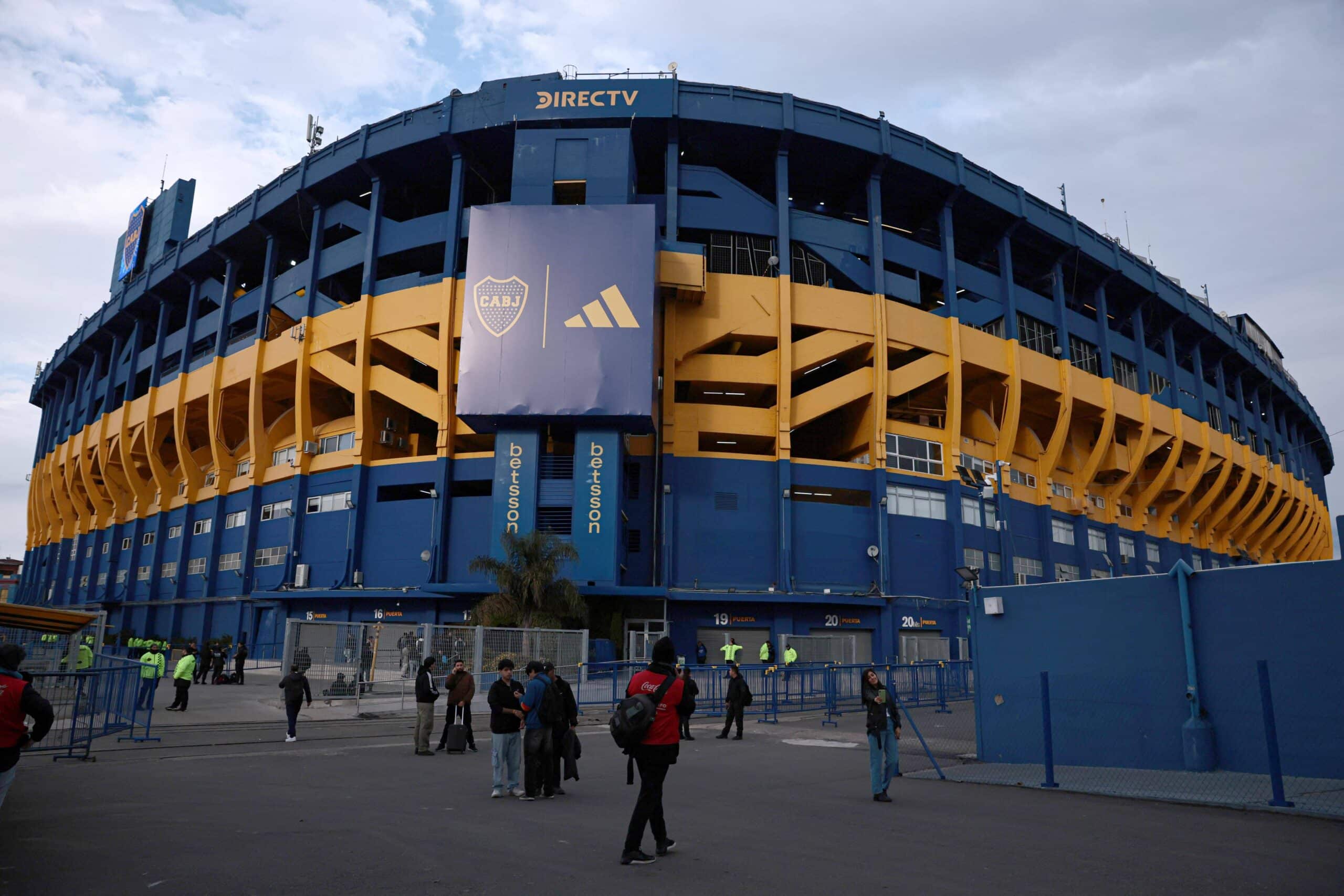

A stadium is the heartbeat of any football club, and none more so than the iconic home of Baco Juniors, La Bombonera. Supporting a football team is all about community, coming together and experiencing the highs and the lows together as one fanbase. Within that community, your stadium is almost like your family home, the one set location where you congregate together every two weeks to cheer, laugh, sing, and cry. So, where is Boca Juniors’ stadium, what is the history behind La Bombonera and just why is it so special to the Boca Juniors supporters?
Boca Juniors FC Stadium - La Bombonera
La Bombonera was built between 1938 and 1940, opening its doors for the first time on May 25, 1940. It can be found in the neighbourhood of La Boca in Buenos Aires, Argentina, and is home to Boca Juniors football club, the most iconic team in the country. The Boca Juniors stadium capacity is currently 57,200, made up of standard seats, boxes, and standing areas. Having said that, it is reported that Boca once welcomed 57,395 fans for its all-time record attendance.
How Did La Bombonera Get its Name?
Considering the official name of the Boca Juniors arena is actually Alberto Jose Armando Stadium, one commonly asked question is where exactly did La Bombonera come from?
The story dates all the way back to when the stadium was first being designed by architect Viktor Sulcic. It is said that Sulcic received a box of chocolates as a birthday gift from a friend one year and decided to take it into project meetings to show his colleagues, because the box was a very similar shape to the stadium they were designing.
La Bombonera means ‘box of chocolates’ in Spanish, and the nickname has stuck ever since. Even the club executives referred to the ground as La Bombonera on opening day back in 1940. The official name for the stadium between 1940 and 1986 was actually just Boca Juniors Stadium, which changed to the Camilo Cichero Stadium to commemorate the club president under which it was built. In the year 2000, the official name was changed to Alberto J Armando to honour the club’s former president who served two spells (1954-55 and 1960-1980).
The Origins of La Bombonera – Boca Juniors’ Stadium in Buenos Aires
Seeing as Boca Juniors were founded in 1905 and La Bombonera did not open its doors until 1940, it comes as no surprise that the club had other stadiums before moving to the famous chocolate box.
The first ground was next to the old Buenos Aires port in Darsena Sur, but in 1921 Boca Juniors kickstarted a fundraiser to save up enough money for their next stadium as the club was suffering from financial troubles.
Fortunately, the fundraiser was a huge success, and the club were able to locate the perfect piece of land for their long-term project. It was located close to the railway lines, which made it perfect for fan travel, and the club managed to secure the land in 1931 for 2.2 million Argentine Pesos.
The original stadium Boca had built on the Brandsen and Del Crucero in 1924 was knocked down in 1938 to make way for La Bombonera, which would be constructed on the same patch of land. Between 1938 and 1940 when the chocolate box opened, Boca Juniors played at Ferro Carril Oeste.
The Grand Opening of La Bombonera
On May 25, 1940, the long two-year wait was over, and the Boca Juniors fans were finally able to pour into their new home. A friendly between Boca and San Lorenzo was scheduled to mark the occasion, and thankfully it went down in the history books as a 2-0 victory for the home side. The first scorer at La Bombonera was Ricardo Alarcon, who also happened to be the second scorer as he netted a brace that day. However, there was no pitch lighting at the ground, so only 35-minute halves were played.
The competitive debut for La Bombonera came on June 2, 1940, this time up against Newell’s Old Boys. Once again, Boca ran away 2-0 winners at home, and once again, Ricardo Alarcon was the first goalscorer. The Argentine was certainly enjoying his new home ground!
Boca Juniors Stadium Expansion and Renovation
Over the years, La Bombonera has received a number of refurbishments, even as early as 1941, just one year after the stadium opened. On November 16 of that year, a second tier of the north stand was opened in order to increase the stadium’s capacity, and it was named after a legend of the club, Natalio Pescia. Twelve years later that two-tier stand became a three-tier stand. The club even managed to add some pitch lighting at this time, to avoid any 35-minute halves in the future.
Fast forward to the 1990s and Boca Juniors started to update their beloved home once more. In 1996, a fourth tier was added to expand the capacity even further. They also took the opportunity to add some more modern features, including offices, a museum, VIP boxes, and a section for the media. A couple of famous painters, Perez Celis and Romulo Maccio, were even called in to brighten up the outside of the stadium.
In 2008, Boca Juniors invested in an electronic screen, which only two other stadiums in Argentina had at the time. Once their bitter rivals, River Plate, boasted this kind of technology, it was a safe bet that Boca would follow suit. In 2012, 500 extra seats were added to the ground, as well as four more boxes.
Boca Juniors Stadium Cracking
Some fans have spotted cracks appearing around the La Bombonera stadium, with a video doing the rounds on social media in 2022 showing one stand visibly moving under the stress of so many supporters.
Argentina at La Bombonera
La Bombonera is not just the home of Boca Juniors, but it has also hosted numerous Argentina international matches over the years. Between 1956 and 1978, the Argentina squad played most of their games at La Bombonera before River Plate refurbished their Estadio Monumental ground and the Argentine FA moved there instead. However, the national team has returned since then and La Bombonera has regularly played host to the blue and white shirts in recent years.
Boca Juniors Stadium Tour and Museum
In 2001, the club opened The Passion of Boca Juniors Museum inside the stadium for fans and tourists alike to enjoy. The museum is housed beneath the grandstands across two floors and covers the entirety of Boca Juniors’ impressive history. A Boca Juniors Hall of Fame can be found within the museum, with Diego Maradona featuring in a big way via a huge mural. Boca Juniors currently have club legend statues of Maradona, Martin Palermo, and Roman Riquelme, with those three also having their own monuments. Legendary manager Carlos Bianchi also has his own statue.
Boca Juniors usually offer stadium tours, as well as access to the museum, but that depends on whether certain areas of the ground are closed for renovation. Attendees should always check before arriving. When stadium tours are open, they give a chance for fans to explore hidden areas of the iconic La Bombonera, including the changing rooms, the trophy room, and even a walk out onto the pitch.
Boca Juniors Fan Atmosphere at La Bombonera
One of the things La Bombonera is most famous for is fan atmosphere. There are many who would claim that Boca Juniors have the loudest and most passionate fans in all of Argentina. Thanks to the chocolate box shape, La Bombonera has amazing acoustics and the voices of the tens of thousands of fans echo around spectacularly. The Boca Juniors faithful have even earned the nickname ‘La Doce’, which means the 12th man. Believe it or not, the supporters are so loud and passionate that La Bombonera is known to shake at times.
What else is La Bombonera used for?
Boca Juniors’ stadium has also been used for a number of concerts featuring the most iconic artists from around the world. Elton John, Lenny Kravitz, the Bee Gees, the Backstreet Boys, and James Blunt have all performed there. It has even featured in a few films over the years.
New Boca Juniors Stadium
One criticism often levelled towards La Bombonera is that it is simply too small to hold all the Boca Juniors fans who want to attend matches. There are over 300,000 club members, but La Bombonera holds just 57,200 fans per match. One candidate to become the next club president, Jorge Reale, has presented concept plans to build an ambitious new stadium that could hold up to 112,000 fans each week. It remains to be seen whether these plans actually come to fruition, but a new Boca Juniors stadium appears to be in high demand.