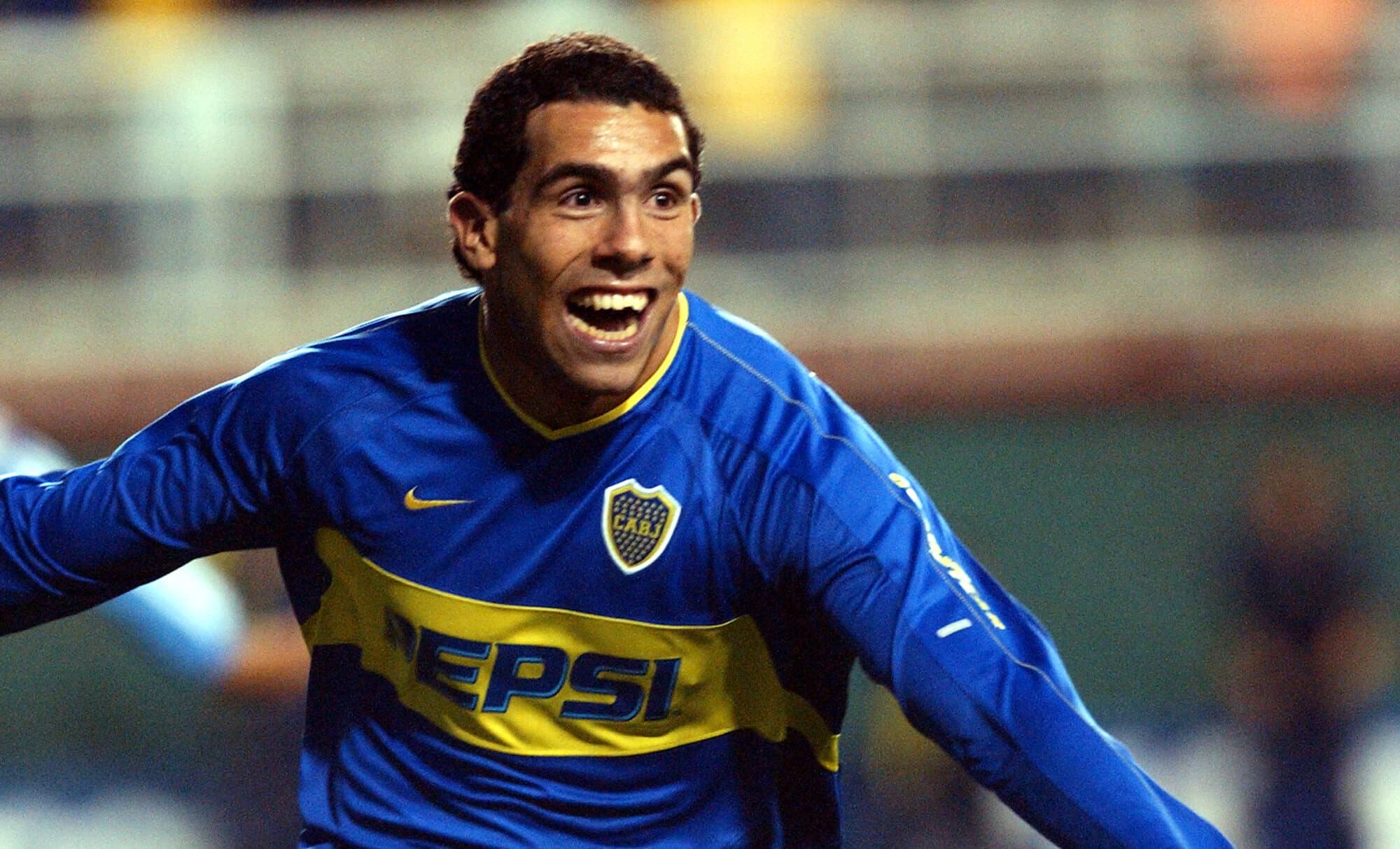

Boca Juniors is not only famed as a giant of South American football, but also one of the most successful clubs in the world at developing the next generation of young players. In 2022, the International Centre for Sports Studies, which is more famously known as CIES (from the French initials) conducted a study on training clubs from around the world. The idea was that they wanted to find which club produces the greatest number of professional footballers across 15 major leagues. 285 clubs were analysed during this study, and it was found that 78 former Boca Juniors academy players were on the books of those clubs, making them the most successful trainer club in the world. So, what makes the Boca Juniors academy so successful, and how do they spot so many promising young players who go on to become soccer legends?
Boca Juniors Youth Academy: Nurturing Talent for Success
It comes as no surprise that the Boca Juniors Academy has earned the nickname ‘The Boca Factory’ over the years, due to the sheer number of professional footballers it scouts, nurtures and develops. The academy system at Boca takes children as young as Under-8 all the way up to the Under-20 team, with the idea being that by the time they reach that U20 they will be ready for the step up to professional football. The Boca Juniors System currently competes in a number of youth leagues which are organized by the Argentine Football Association across multiple age ranges.
The Influence of Mauricio Macri on Boca Juniors Academy
While Boca Juniors has always had a rich history of bringing talented youngsters through the Boca Factory, it was arguably Mauricio Macri who changed the game for the Argentine giants. Being one of the biggest clubs in a country comes with a certain pressure to sign the biggest players and spend the most money. If you look at the likes of Real Madrid, Manchester United, Paris Saint-Germain, and Juventus, that pattern has rung true over decades and decades of football. However, Macri wanted to build something different with Boca – a brand new Boca Juniors Youth Program.
One year after being elected president of the club, Mauricio Macri made a brave statement in 1996. Rather than buying big-name players for big money and heaping pressure on those stars to hit the ground running, he instead wanted to invest in the academy. The plan was for Boca Juniors to create their own stars, rather than sign them from other clubs. Of course, this is far easier said than done, so Macri sought some outside assistance in his quest.
Boca Juniors hired Bernardo Griffa and Ramon Maddoni to spearhead Macri’s academy project. Griffa had made a name for himself as one of the most successful head scouts in the country, having set up a potent network with Newell’s Old Boys before joining the Boca project. Maddoni even arrived with his own nickname, ‘the king of baby football’, which was a six-a-side football game for children between the ages of five and twelve. In short, Maddoni has years of experience spotting the next generation of talented dribblers from a very young age, while Griffa knew exactly how to scout such players from other academies.
To judge whether the Macri, Griffa, and Maddoni project was a success, you need only look at the numbers. The Boca Factory has brought through more than 350 homegrown players since the new academy project was introduced, selling those players on for a profit and kickstarting their footballing journeys. At one stage, there were over 130 of these graduates playing professionally across 35 different leagues in Argentina, Germany, Spain, England, the Netherlands, China, and more. Turning a youth prospect into a Boca Juniors graduate is complex, but it is an art form the club have definitely perfected.
How do Boca Juniors scout so many good players?
One of the key cogs in the Boca Factory machine is the club’s scouting network, which was restructured by Bernardo Griffa back in the 1990s. The idea was simple, Griffa wanted to put a Boca Juniors scout in every small town in Argentina. Simple, but difficult to pull off!
What Boca decided to do was choose local people in these towns to conduct their youth scouting for them. Griffa would travel around Argentina and watch the home crowds, choosing someone who impressed him to be the scout for that area. These were usually just normal people. Some were police officers, some were butchers, and others were teachers, shopkeepers or delivery people. The most important thing was that they knew football, they were passionate, and they attended lots of games.
After a while, Boca Juniors had scouts capable of travelling to almost every town and village in the country – an impressive resource when attempting to beat other clubs to the next generation of footballing talent. From that scouting network, Boca would welcome over 25,000 players on trials, then cut down the numbers to just 40. Fast forward to today and they even have 300 football embassies around the world to scout young talents from other countries, with particular success in Japan and China.
Between the two of them, Griffa and Maddoni scouted Carlos Tevez, Fernando Gago, Nicolas Burdisso, and Ever Banega. Boca Juniors managed to sell these four players for almost 100 million Euros in total. The perfect example of Boca’s youth development program and four youth success stories.
One former Boca Juniors chief scout reportedly once said: "We started this 12 years ago, and it takes that amount of time to start seeing real results. But after that, it will never ever stop. Trust me. The world will keep hearing about Boca from now on."
The Boca Juniors formation – From Youth to First-Team
During this time, those in charge of the Boca Factory wanted to make sure the transition from academy to first-team was as seamless as possible. After all, how many times do you see ‘the next big thing’ from a club’s academy fail to make the all-important step up? It was decided that Boca players should be taught the 4-3-1-2 formation from a very young age. That way, they would become familiar with the first-team’s style of play long before they reached senior football. This tactic has been seen at some of the other most successful academies in the world, such as Barcelona and Ajax. It gets youngsters comfortable with the style and system so if and when they are given a chance to impress in the first-team, they are more likely to be able to hit the ground running.
Boca Juniors also enter their youth teams into international youth football tournaments to get them used to tournament football. They are regulars in the Under-20 Copa Libertadores, winning their first title in 2023 by beating Independiente del Valle 2-0 in the final. Yet another example of the Boca Juniors Youth Academy achievements.
Boca Juniors Academy Youth Training Style
Boca Juniors make sure to put their academy players through the same tough pre-season as the first team. Not only does this prepare them for the physical demands of professional football, but it also ensures they are drilled with a sense of high standards from an early age. Matching youth soccer training and youth coaches with that of the first-team has been key to Boca’s success. The academy looks to build up the physical strength of their young players, and even conducts tests to determine what height they think a player will grow to. This can be useful with younger footballers when choosing what positions to play them in.
One of the biggest assets for the Boca Factory is sheer competition. Remember, we said the club hands out trials to over 25,000 kids around Argentina before whittling the number down to just 40. That means, even if you are already in the academy, you have to constantly fight to keep your place. If players fall short of expectations, they can easily fall behind their fellow youngsters and may not be handed a youth spot for the next season. Rumours are that Fernando Gago, who went on to play for Real Madrid, was one such player who almost lost his place in the Boca Juniors academy. Fortunately, the coach put an arm around him and told him to stay and fight, and the rest is history.
Famous Historic Boca Juniors Players
Diego Maradona
There have been a number of world-class players to wear the iconic Boca Juniors jersey over the years, including the infamous Diego Maradona. One of the most recognisable footballers in the history of the game, and a son of Argentina, Maradona enjoyed two spells with Boca at the start and end of his career illustrious career. He won the Primera Division with Boca in 1981 before leaving to join Barcelona. Just five years later, Maradona lifted the World Cup with his Argentinian teammates, which was a proud moment for Boca and its supporters.
Carlos Tevez
However, Maradona is far from the only famous footballer to grace the Boca Juniors grass. Perhaps one of the most iconic players to come through the Boca Factory is Carlos Tevez, who went on to have an impressive career in the biggest league in the world, the English Premier League. Tevez won the league title twice with Manchester United, and once more with their fierce rivals, Manchester City. He also lifted the Champions League trophy with the Red Devils, and multiple Serie A titles with Juventus. During his multiple stints at Boca Juniors, Tevez won five Primera titles, a Copa Libertadores and a Copa Argentina, among other trophies.
Juan Roman Riquelme
Juan Roman Riquelme is another footballing legend to have worn the blue and gold of Boca, even coming through the iconic Boca Factory academy. Like Maradona, Riquelme had two different spells with Boca Juniors at the start and end of his career. He also won five league titles across those two spells with Boca, and like Maradona, he only left the club to join Barcelona. He even returned to serve as the Boca Juniors vice president after his playing days were over.
Martin Palermo
We would be remiss not to mention Boca Juniors’ all-time leading goalscorer when it comes to legends of the club. Martin Palermo netted 236 goals for Boca during his career, and is also seventh on the all-time leading Primera Division scorers list with 227 goals in 408 games. Palermo enjoyed two spells with Boca from 1997 to 2001 and again from 2004 to 2011.
Angel Clemente Rojas
Regarded by some as one of the greatest idols in Boca Juniors history. Rojas joined as an 18-year-old and started his career with Boca back in 1963. He remained with the club until 1971, winning four Primera Divisions and a Copa Argentina. He scored 78 goals in 224 games for the club.
Other notable Boca Juniors legends and academy graduates
Former Argentina captain, Antonio Rattin, also wore the blue and gold of Boca, as did renowned strikers, Gabriel Batistuta, and Claudio Caniggia. There have also been plenty of youngsters to come through the Boca academy and go on to have great professional careers. These prominent alumni include Oscar Ruggeri, Fernando Gago, Americo Tesoriere, Pedro Calomino, Natalio Pescia, Alberto Tarantini, Roberto Muozo, Leandro Parades, Alfredo Garasini, Ernesto Lazzatti, Mario Boye, Diego Latorre, Natalio Pescia, and more.
Boca Juniors Academy World Cup Winners
A number of iconic players from the Boca Juniors Academy have gone on to win the ultimate footballing honour, the World Cup – another example of the sheer quality of youth talent the club is able to produce. Alberto Tarantini was one of the first names to be added to this list, making his Boca debut in 1973 before winning the World Cup in 1978, at which point he was playing for Birmingham City in England. Omar Larrosa played his first game for Boca in 1967 and won the World Cup in 1978 alongside Tarantini. Marcelo Trobbiani and Oscar Ruggeri both won the World Cup in 1986, despite making their Boca Juniors debuts seven years apart. Most recently, the 2022 World Cup-winning Argentina side included Leandro Paredes and Nahuel Molina, both of whom came through the Boca Factory academy. Parades has played for some huge clubs in his career, including Roma, Juventus and PSG, while Molina has starred for Atletico Madrid.