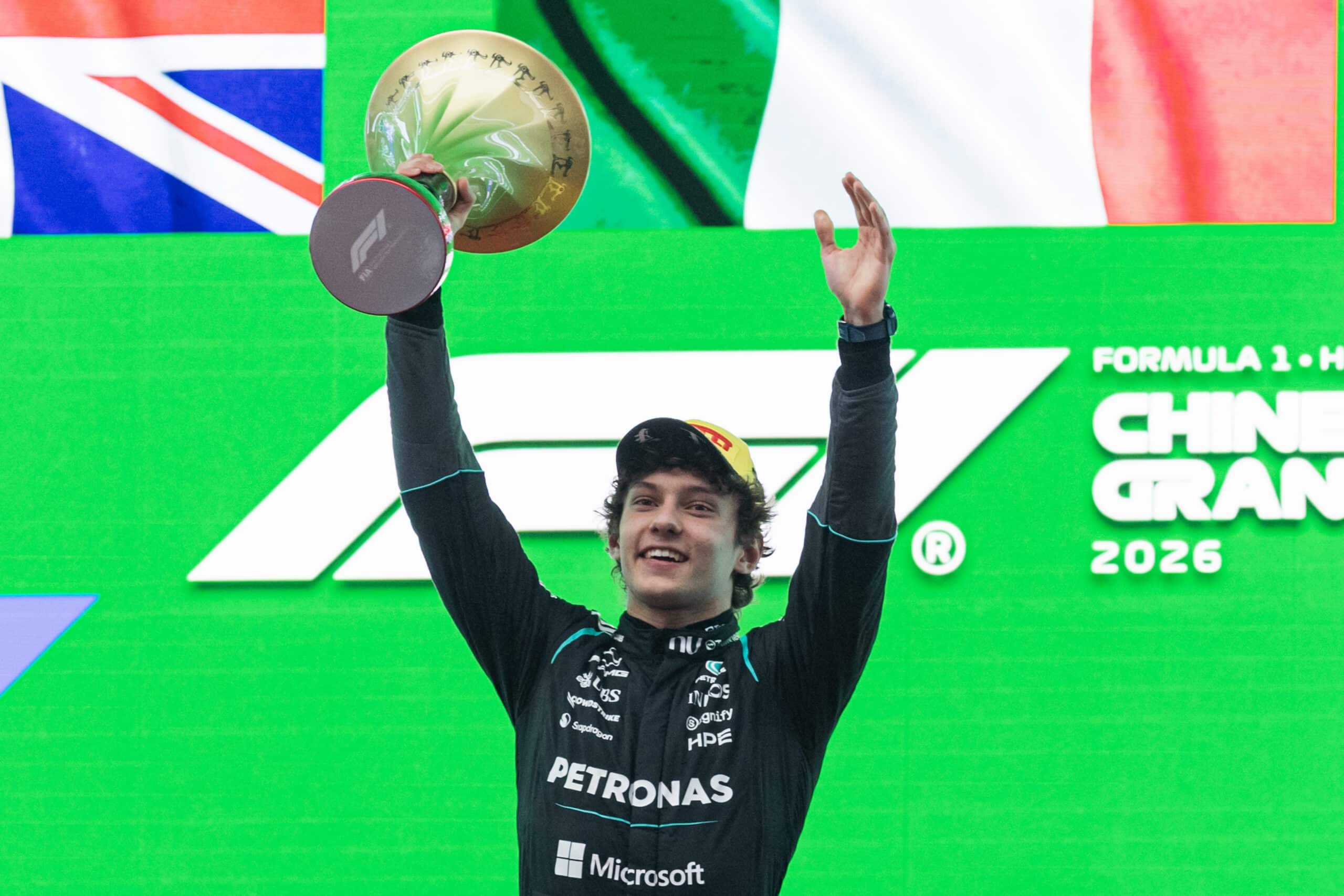

It’s being billed as a new era for Formula One, with regulation changes that promise faster, more entertaining races delivered in a greener, more sustainable way.
The 2026 campaign, particularly its early races, will very much be a jaunt into the unknown for drivers and teams looking to innovate and gain an edge on the rest in cars that are more aerodynamic, streamlined and, partly, electric powered.
This is F1’s great reset; a fresh start for everyone. But who will thrive and who will have to drive to survive in this exciting new era?
Surely, new stars will emerge – while perhaps some veterans and mid-grid campaigners will also come to the fore.
Either way, the 2026 season is shaping up to be a fascinating and unpredictable entry into the sport’s fine history.
Which Drivers will Suit the New 2026 Cars
The new regulations are designed to promote faster races, in which overtaking manoeuvres can be performed more easily – both with the cars’ size and weight as well as the introduction of “active aero” to replace the iconic DRS.
Changes to battery usage and energy management will also favour those that are able to drive strategically and patiently. For context, an experienced campaigner in Fernando Alonso is actually, at the time of writing, higher in the Drivers’ Championship betting market than the likes of Oscar Piastri and Charles Leclerc.
Alonso has been in and around F1 for more than two decades, witnessing first-hand the effects of rule changes and technological innovation. He has a history of being able to adapt to new ways, so the Spaniard could be a somewhat surprise figure towards the front of the grid this season at the age of 44.
Of course, a driver is only as good as the car they drive. And the new regulations have, in the past, favoured works teams over those that license their power unit from another manufacturer.
That’s perhaps one of the reasons why the betting market is so pessimistic about the McLaren duo Lando Norris and Oscar Piastri, even though they were so dominant for the majority of the 2025 season.
McLaren, who buy in their power unit from Mercedes, won’t have the same first-mover advantage as the German outfit, who have – in past seasons following regulation changes – been at the forefront of innovation and race-ready speed.
So step forward George Russell and Kimi Antonelli, who will lead the way for Mercedes. The young duo won just two races between them in 2025, but such is the bullishness about the construction team at Mercedes they are expected to be key figures vying for pole positions and race wins this time around.
Another pre-season prediction is that the configuration of the new cars could well hand an edge to the most aggressive drivers. Whether that plays out only time will tell, but if it does then don’t discount Max Verstappen from the title picture – his ‘win at all costs’ mentality could well be backed by a more supportive car on the track.
Young Drivers vs Experienced Campaigners in F1’s New Era
They say that being a Formula One driver is a ‘young man’s game’; when you consider the extraordinary physicality of the job, that comes as no great surprise.
It may also be the case that younger drivers will be able to adapt faster to the new conditions, taking battery management and energy efficiency in their stride.
That said, with less downforce it will still require a technically proficient driver – no matter their age – to handle F1’s tighter or higher-speed bends.
And with the aim of the new regulations to create a more level playing field between the front and the back of the grid, you wonder if some races will become more akin to chess matches on four wheels – when strategy and tactics are so vital, often it’s the more experienced campaigners that have the edge.
Adapting quickly and thriving accordingly: that’s the name of the game in 2026. Whether the age of a driver plays a part in that, we’ll all have to wait and see.
Drivers with Strong Technical Skill and Consistency
Let’s assume that there is less of a disparity in the speed of the cars this season; therefore, technical driving skill and sound strategy come to the party.
Who would that benefit the most?
Maybe those with what we might describe as ‘ring craft’. Think of drivers like Lewis Hamilton – considered to be amongst the best to ever to climb into the cockpit – Alonso and even Carlos Sainz, who all bring no shortage of skill and experience to the table.
Although the new regs point to faster speeds and lap times, races presumably aren’t going to descend into all-out battles of pace – Alex Albon even revealing his belief that drivers and support teams with ‘the brain capacity to understand and facilitate’ will enjoy the greatest advantage.
Who Could Outperform Expectations in Midfield Teams?
Although there may be some variance at the start of the new season as drivers and their support teams adjust to the new rules and scramble for improvements, in the end the ‘big four’ of McLaren, Mercedes, Red Bull and Ferrari are expected to be at the forefront once more.
In which order, though… well, who knows?
One to watch is Kimi Antonelli. He finished seventh in the standings in 2025, but has every right to believe he can improve on that this time around – the anticipated fast start of Mercedes will certainly help, but the Italian is a fine talent in his own right: he recorded the fastest lap in three races last term.
As for the midfield pack, there’s a feeling that Aston Martin – and particularly Fernando Alonso – can benefit the most from the new regulations.
Cursing the timing of the new regulations may well be Williams, who finally found a successful recipe at the end of 2025 with a third place in Qatar and fifth in Las Vegas.
The man responsible for those lofty returns was Carlos Sainz, while his Williams stablemate Alex Albon pointed in seven of his opening eight races of the season. Both could break out from midfield again in 2026, although much will depend on how well their employer is able to utilise their new Mercedes power unit – alongside the myriad other specification changes.
Many pundits believe that Isack Hadjar is one of the most exciting young drivers in F1. He is the epitome of the modern driver – aggressive and speed-oriented, but able to handle even the most challenging of tracks and conditions.
The Frenchman pointed in 10/21 starts last season, with a best finish of third in the Dutch Grand Prix. Given the inconsistencies of his Racing Bulls vehicle, that was an excellent effort from Hadjar – could his ‘promotion’ to Red Bull help him to kick on in 2026?
How Team Switches Before 2026 Could Matter More Than Usual
There will certainly be a new look to the grid in 2026.
Cadillac will be making their F1 debut, with experienced hands Valtteri Bottas and Sergio Perez at the wheel. Audi will also be on the grid, taking over from Sauber and building their own power unit.
It will be fascinating to see if Ford’s long expertise in motor racing can add value at Red Bull, where they will join forces on engine design. As mentioned, look out for new RB driver Isack Hadjar – he could be the perfect foil for Max Verstappen after stepping up from Racing Bulls.
Honda may have been dumped by the Red Bull franchise, but they will remain on the grid courtesy of a new supplier deal with Aston Martin, who have made the big decision to end their partnership with Mercedes. Will that switch pay dividends?
Alpine have also ended their association with Renault; this will be the first time since the year 2000 that the French firm hasn’t been part of an F1 campaign. Alpine will instead replace Aston Martin as a Mercedes partner.
Normally when discussing team changes ahead of a new season, it’s driver switches that generate the most column inches. But in 2026, with the new regulatory framework, the link-up between the teams and their power unit suppliers could prove to be the key talking point.
But, in the cockpit, there are some changes to be aware of as covered already: Hadjar, Bottas and Perez the drivers returning to the grid with a new team.
Hadjar’s replacement at Racing Bulls will be Arvid Lindblad, a precocious 18-year-old who impressed in Formula 2 last season. If he can adapt quickly to the demands of top tier racing, Lindblad’s aggressive style could see him battling for points on a race-by-race basis.
Although these driver changes are unlikely to make an impact on the title battle, the switches in power unit supply could play a role in determining whether McLaren – a customer of Mercedes, remember – can continue to dominate or not.
The early signs are not, with the German firm tipped by many to return to F1’s top table in 2026.