
Football is the most popular sport in the world and its followers tend to be extremely knowledgeable about the game.
Even so, there are some facts that would astonish even the most seasoned football fans.
We are not talking about Lionel Messi’s goal tally or Real Madrid’s record in the Champions League. The following 10 amazing football facts will truly blow your mind…
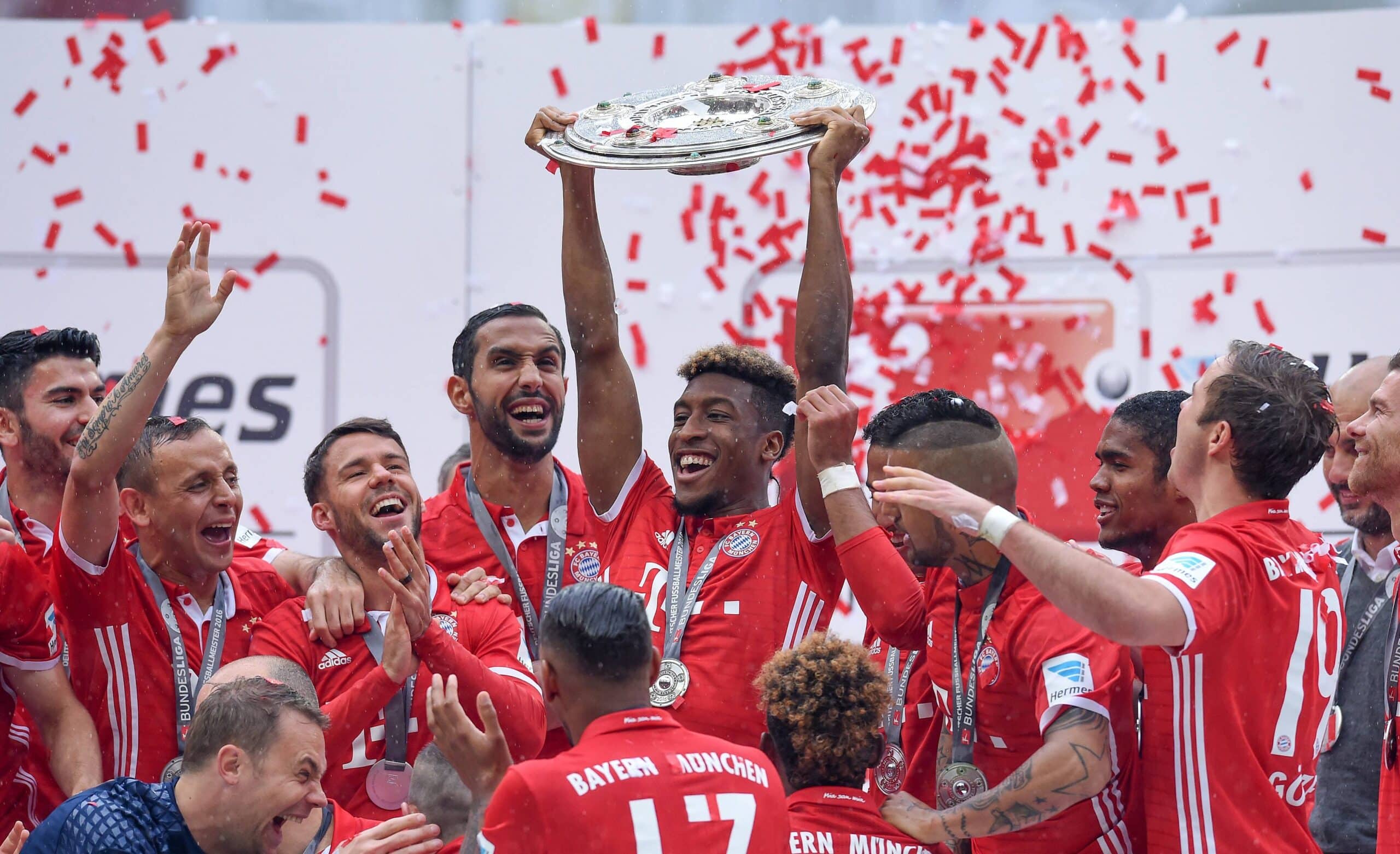
1. Kingsley Coman has never not won the league
The vast majority of professional footballers never experience the feeling of winning a league title. A select few get their hands on one or two trophies during their careers. And an even smaller set of players grow accustomed to winning silverware season in, season out.
Even among that latter group, Kingsley Coman stands out. The Frenchman will turn 28 in 2024. He has been a footballer for more than a decade now. And at the time of writing, Coman has never ended a season without a league winner’s medal around his neck.
His first campaign at senior level was with Paris Saint-Germain in 2012/13. Coman won Ligue 1 that year and the French giants went on to retain the prize the following season, although the winger’s involvement was limited.
Coman was triumphant in Serie A in 2015/16 as Juventus finished atop the table. He then moved to Bayern Munich, where he has won the Bundesliga title in eight out of eight seasons. Bayern are being pushed hard by Bayer Leverkusen in 2023/24, but Coman is a positive omen when it comes to winning titles.
2. Barbados once defended both goals against Grenada
The laws of the game are codified around the world, but individual competitions still have a degree of license to shape the structure of their tournaments. Many smaller events have experimented with novel rules, including the Caribbean Cup of 1994.
For that tournament, it was decided that an extra-time goal would automatically win a match. In addition to the golden goal rule, an extra-time goal was deemed to be worth two goals.
In their final group game, Barbados needed to beat Grenada by two clear goals to advance to the next round. They were leading 2-0 until Grenada pulled one back in the 83rd minute, at which point Barbados deduced that a draw after 90 minutes would be a decent result since it would give them the chance to score a goal worth double in extra time.
Barbados therefore deliberately scored an own goal to make it 2-2. Grenada quickly realised their plan and spent the final few minutes trying to score in either goal, because a 3-2 win or a 3-2 defeat would send them through. But Barbados held out and then notched the decisive goal in extra time to win 4-2.
3. Mark Hughes played two games on the same day
We often hear about the dangers of burnout in the modern game. It is no longer uncommon for footballers at the highest level to play upwards of 70 matches in a season, a development which has led to calls for a restructured calendar and better protection of players.
Mark Hughes might laugh at complaints that three games in a week is too much. The former Welsh striker once appeared in two matches on the very same day - and in two different countries.
After struggling at Barcelona, Hughes was loaned to Bayern Munich for the 1987/88 campaign. He was determined to impress in Germany, but he also remained proud to represent his country at every possible opportunity.
Thus, on 11 November 1987, Hughes played for Wales against Czechoslovakia in Prague in a Euro 1988 qualifier, before flying across the border in time to feature for Bayern in a cup game against Borussia Monchengladbach. Was it worth the effort? Maybe not: Hughes lost both matches.
4. A coin toss decided the outcome of a European Championship game
Penalty shoot-outs are a routine part of knockout football these days, but that was not always the case. For instance, spot-kicks were not used as a tiebreaker in the European Cup until 1970 and in the World Cup until 1982.
Before this, a replay was the favoured method of separation wherever possible. But given the tight time constraints of international tournaments, this was not always feasible.
Take the European Championship of 1968, held over five days in Italy. The hosts drew their semi-final with the Soviet Union 0-0 just three days before the final was scheduled to take place in Rome. That match could not be moved, so a coin toss was used to determine the outcome of the semi.
“I went up with the Russian captain,” said Italy captain Giacinto Facchetti. “We went down to the dressing rooms together, accompanied by two administrators from the two teams. The referee pulled out an old coin and I called tails. It was the right call and Italy were through to the final.”
5. Real Madrid beat their own reserve side in a cup final
Unlike in most other countries, major Spanish clubs are permitted to field their reserve teams within the league system. The likes of Real Madrid Castilla and Barcelona Atletic cannot compete in La Liga, but they could theoretically operate as high as the second tier.
In the present day, those second teams are not allowed to enter the Copa del Rey, Spain’s main cup competition. But this was not always the case. Back in 1980, Real Madrid Castilla advanced all the way to the final - where they met the senior Madrid side.
Castilla, who began their journey in the very first round, beat Extremadura, Alcorcon, Racing Santander, Hercules, Athletic Bilbao, Real Sociedad and Sporting Gijon to advance to the showpiece event. But a talented young side was no match for the first team, who administered a 6-1 thrashing at the Estadio Santiago Bernabeu.
Despite the defeat, Castilla qualified for the Cup Winners’ Cup with Madrid, who also won La Liga, advancing to the European Cup.
6. New Zealand were the only unbeaten team at the 2010 World Cup
After a 28-year absence, New Zealand returned to the World Cup in 2010. Benefitting from Australia’s recent switch from Oceania to Asia, the Kiwis were suddenly the strongest side in their region by some distance.
After winning Oceania’s qualification tournament, they edged out Bahrain 1-0 over two legs in an inter-confederation play-off. That was enough to send New Zealand through to the tournament in South Africa.
Tipped to struggle in Group F, the All Whites proved to be a much tougher proposition than expected. A last-minute equaliser from Winston Reid earned them a 1-1 draw with Slovakia, before New Zealand held Italy to the same scoreline five days later. They then proceeded to grind out a goalless draw against Paraguay.
A tally of three points was not enough to send them through to the knockout phase. But since eventual champions Spain lost to Switzerland in the group stage, New Zealand ended the World Cup as the only undefeated team.
7. AC Milan once won Serie A while scoring only 36 goals
Italian teams have long been renowned for their defensive solidity. It is something of a stereotype these days, but for a while it genuinely was more difficult to score goals in Serie A than in other European leagues. Even Diego Maradona could only manage 16 in his most productive season with Napoli, in 1989/90.
A few years after that, in 1993/94, AC Milan won the Serie A title under Fabio Capello despite only scoring 36 goals. That was 28 fewer than Sampdoria in third and 22 fewer than runners-up Juventus.
In fact, only seven sides in the 18-team division had a worse attacking return than Milan. Atalanta and Udinese were both relegated while scoring one fewer goal than the champions.
Milan owed their success to a water-tight defence that was breached just 15 times. They won a total of nine games 1-0 and kept a clean sheet in 64.7 percent of their 34 encounters.
8. The biggest football stadium in the world is in North Korea
Football is the most popular sport in most countries across the world. Many of the most iconic sports areas on the planet are used for football, including in London, Madrid, Milan, Buenos Aires and Rio de Janeiro.
However, you will not find the largest football ground in the world in England, Spain, Italy, Argentina or Brazil. Nor is it in Germany, Japan, the United States, China or Saudi Arabia.
Step forward North Korea. A country that has only ever qualified for one World Cup (they did not win a game in 2010) boasts the football stadium with the highest capacity on planet earth. The Rungrado 1st of May Stadium can officially hold an astonishing 114,000 supporters when it is full.
Opened in 1989 (on May 1, of course), it is only occasionally used for football matches. This is surely in part because it is too big: a few thousand fans rattling around such a vast arena is not a particularly good look.
9. Wolverhampton Wanderers were once champions of the USA
Football in the United States has a longer history than you might imagine. Although Major League Soccer only began after the country was given the hosting rights for the 1994 World Cup, other domestic competitions were played long before that.
It is common these days for major European clubs to conduct summer tours of the USA, but this practice also dates back decades. For instance, English side Wolverhampton Wanderers headed across the Atlantic in 1967 to take part in a tournament at the end of their regular season.
Renamed the Los Angeles Wolves, the entire team was made up of players who ordinarily plied their trade for Wolves of England. Their opponents were also essentially from the British Isles, with Scottish outfit Aberdeen masquerading as the Washington Whips.
Wolves won a thrilling encounter 6-5 in what the Americans termed “sudden-death overtime”. A team from the middle of England was thus crowned champions of the USA.
10. Giuseppe Bergomi played in four World Cups but no qualifiers
The World Cup has been overtaken by the Champions League in terms of quality, but appearing in the former is still widely seen as the pinnacle of a footballer’s career. When pushed to choose, winners of both tournaments tend to pick the World Cup triumph as the greater achievement.
Giuseppe Bergomi knows what it takes to lift that famous trophy. The former defender, who represented Inter for his entire club career, helped Italy win the World Cup in 1982, beating West Germany in the final.
That was one of four World Cups in which Bergomi featured: he also played in Mexico in 1986, on home soil in 1990, and in France in 1998. Despite that, he never played a single World Cup qualifier.
Bergomi only broke into the Italy team after they had booked their spot in the 1982 edition. They qualified as holders in 1986 and hosts in 1990, and he was coaxed out of international retirement to appear at France ‘98 at the eleventh hour.