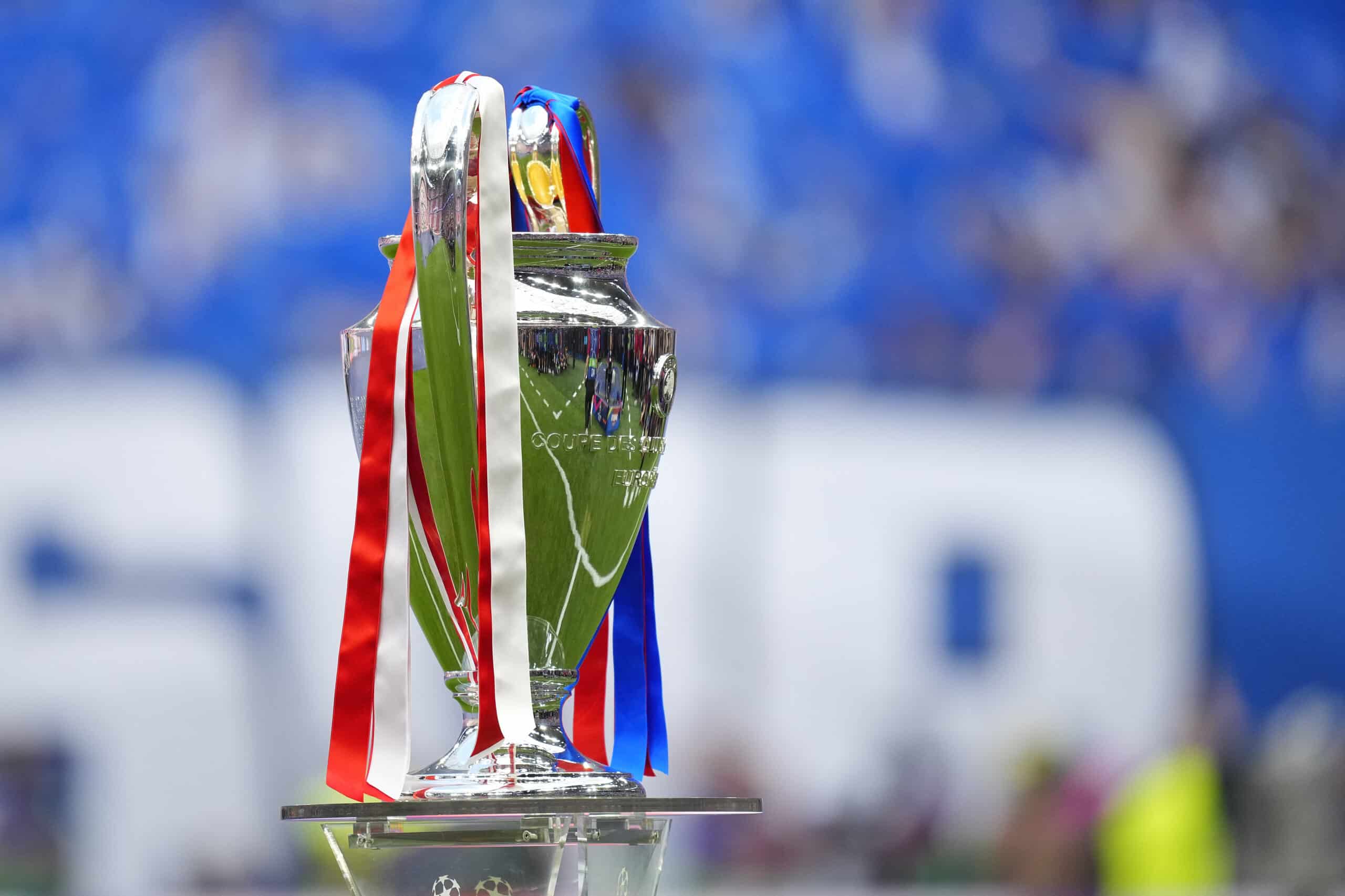

The Champions League has been such a shining staple of European football for the past 30 years; it seems strange to think of a time before the iconic ‘these are the champions’ anthem. But while the current iteration has been dominated by your Real Madrids, Barcelonas, and Paris Saint-Germains, the old European Cup was lifted by the likes of Nottingham Forest, Celtic, Aston Villa, and even Steaua București.
So, how did the Champions League change European football forever? And has it all been good, or do we miss some aspects of the good old days?
Football History: The Evolution of the Champions League
The first era of the Champions League was launched back in 1955 as the European Champions Clubs’ Cup. Since that was a bit wordy, fans commonly referred to it simply as the European Cup. Back then, the top tier of European football was only for the elite. In 1955/56, 16 domestic league winners qualified to take part, including the champions of Spain (Real Madrid), Italy (AC Milan), and France (Reims). Real Madrid ended up beating Reims in the final. Some things never change.
Since the European Cup was limited to domestic champions only, the winners were able to claim the truly prestigious title of ‘Champions of Europe’. The champions of the champions. Since this made it a much smaller competition, with only 16 participants in year one, the European Cup consisted of a simple bracket. Starting with the equivalent of a Round of 16, it then moved straight into the quarters, semis, and eventual final. In the 1990s, that all changed.
In 1991, UEFA implemented a new round-robin group stage, which remained a staple of the competition all the way up until 2024. One year later in 1992, the European Cup was rebranded to the Champions League, and by 1997/98, the competition was opened up to multiple teams from select countries, rather than champions alone. While many countries still only sent their domestic winners to take part, the top five leagues had four entrants per year. That meant you could finish 4th in the Premier League in 1999 and still be crowned Champions of Europe in 2000.
But what else changed with the Champions League rebranding…?
Positive Champions League Impact on European Football
Several positive, long-lasting, and deeply impactful changes emerged from the launch of the Champions League back in 1992. With the new-style competition came increased investment, wider broadcasting, and a greater number of teams under the spotlight.
European football reached new entertainment heights
The greatest positive to come with the modern era of the Champions League is undoubtedly the entertainment value. While the old European Cup came with prestige and heritage, it was almost over before it had even kicked into gear. With the new-look League Phase, we are now treated to titanic fixtures from Gameweek 1 all the way to the final. Just look at the 2025/26 League Phase as the perfect example. In the very first week, we had Juventus 4-4 Dortmund, Real Madrid 2-1 Marseille, Bayern 3-1 Chelsea, Liverpool 3-2 Atletico, Newcastle 1-2 Barcelona, and Man City 2-0 Napoli. All within the space of 48 hours! Not to mention the fact that the 1992 rebrand was worth it purely for the new Champions League anthem.
Increased investment at club level
With more fixtures, more sponsorship, and heavier investment comes a whole lot more money for the clubs involved. Those who have established themselves as Champions League regulars, including the likes of Real Madrid, Barcelona, Liverpool, Bayern Munich, AC Milan, and PSG, have reinvented themselves as global brands beyond even the sport itself. That has also generated a whole lot more money to invest in the best players on the planet, and without that, we wouldn’t have been treated to some of the most iconic teams of all time. Where would 2013 Real Madrid have been without spending big on Cristiano Ronaldo and Gareth Bale? Or 2019 Liverpool without Salah, Mane, and Firmino?
The Champions League expanded fan bases across the globe
After expanding in 1992, UEFA made a huge broadcasting push to turn the Champions League into club football’s flagship commercial product. It is shown in almost every country across the globe, which brings in huge sponsors, mouth-watering investment, and millions more fans to the biggest clubs in the world. There is a reason you never have to walk more than 100 yards to find a Manchester United supporter, no matter where you are in the world.
Playing styles from different countries met face-to-face
The speed of the Premier League. The tika-taka passing of La Liga. The stalwart defence of Serie A. Back in the European Cup days, you only got to see these styles merge a few times a season. Thanks to the Champions League, some of the most iconic footballing match-ups span across multiple leagues. Manchester City vs Real Madrid and Bayern Munich vs Arsenal spring to mind. Thanks to this, we have also seen clubs adopt and adapt each other’s tactics over the years, creating an even more exciting global spectacle.
The Champions League served as a spotlight for emerging talent
If you shine in the Champions League, you can bet it was seen by leading football scouts, and you can guarantee it was caught on camera. The competition has become a real spotlight for young, up-and-coming talent over the years. Remember when Gareth Bale burst onto the scene and sent Maicon (the best right-back in the world at the time) searching for a taxi? Two years later, Bale moved to Real Madrid for a world record fee.
The Champions League does come with some downsides too
Unfortunately, it’s not all sunshine and rainbows when you pump hundreds of millions of Euros into a competition. For every big winner, there has to be a loser left behind in the dust.
Champions League sparked dramatic financial inequality
With the new prize money, broadcast revenue, sponsorships, and increased matchday income, those who qualify for the Champions League every season can earn jaw-dropping sums. In 2026, PSG claimed €146 million (£127m or $170m) in prize money alone for winning the tournament. The unfortunate fact is that the more you qualify, the more money you earn, and the easier it is to qualify again. The richest clubs get richer, the gap between the elite and the challengers grows, and significant financial inequality ensues.
European football took the focus away from domestic success
Before 1997, it was all about winning your domestic leagues and cups. Only the Premier League winner could even book a spot in the European Cup, after all. However, with the Champions League bringing in such huge revenue, many clubs are now more focused on finishing in the top four than they are on chasing domestic success. If you asked a team to choose between fourth place and no trophy, or sixth place and an FA Cup, plenty would sadly opt for the former.
Football business growth throws domestic leagues out of balance
Domestic leagues are often won by just a handful of teams. The Premier League almost always goes to one of the Big Six. The Bundesliga is usually Bayern Munich, Ligue 1 is won by PSG more often than not, and La Liga is dominated by Real Madrid, Barcelona, and Atletico. Seeing winners outside those elite groups becomes even more unlikely by the year as the financial gap grows.
It’s not just about the big leagues either. Just look at Azerbaijan as a worrying example. In 2025/26, Qarabag earned €36m for getting to the Champions League knockout play-offs, which amounts to almost half the total combined revenues of every single club in the Azerbaijani top division. Just one season of success now gives Qarabag the chance to set up an era of financial domestic dominance.
Fixture congestion brings injuries and harms the product
Playing a game every three days for almost nine months (plus international tournaments) has a clear impact on an athlete’s body. It’s no coincidence that we are seeing more and more long-term muscular injuries. Of course, we get to watch more football, which always feels like a good thing. But wouldn’t you rather watch the best players at the top of their game once a week, rather than fatigued and injured stars struggling to keep up with a hectic schedule?
Does the Champions League risk losing its soul?
Money doesn’t always mean better. At what point does football become more of a product than a sport? At the 2026 World Cup final, the game was even delayed by an elongated half-time show! Investment in the sport we love is a good thing, if done correctly. But those in charge must be careful not to dilute the best things about the beautiful game – the electricity, the accessibility, and the escapism.