
As football has become increasingly globalised over the last decades, national styles are not quite as pronounced as they once were. Yet Europe’s five major leagues do still differ in terms of tactical identity and stylistic approaches.
That brings its own challenges for players moving between the Premier League, La Liga, Serie A, Ligue 1 and the Bundesliga. As well as getting used to a new culture and potentially learning a new language, these footballers must adapt their playing styles in order to be as successful as possible in another European competition.
That is not always easy to do. Countless players have struggled to replicate their form from one European league in another. Others have thrived while making minimal changes to their game, and others still have done deeper work to ensure they are ready to prosper elsewhere.
In this article, we have taken a look at the career paths of 10 high-profile footballers who have played in at least two of Europe’s top five leagues, analysing how they adjusted after joining a club in a different country.
Cristiano Ronaldo
Premier League to La Liga to Serie A
Cristiano Ronaldo arrived in the Premier League with Manchester United at the tender age of 18. Back then he was a skilful winger, but he was physically slight and not particularly robust in the challenge. Ronaldo had a habit of going down easily, yet the physical nature of the Premier League soon toughened him up.
After six years at United, Ronaldo had established himself as one of the best players in the world. He joined Real Madrid in 2009 and spent a hugely successful nine seasons there. In that time, he became less of a dribbler and more of a finisher. La Liga is less intense than the Premier League, but it arguably has a higher technical level. Ronaldo was able to adapt.
He then moved to Serie A side Juventus, where the tactical demands of the Italian league helped him to hone his movement and positioning further.
Neymar
La Liga to Ligue 1
Neymar announced himself as one of the brightest prospects in the game at Brazilian outfit Santos, where his performances earned him a move to Barcelona in 2013. Brazilian domestic football is more aggressive than the stereotype of that country suggests, so the technically gifted winger benefitted from the greater protection from referees in Spain.
Despite being one of the best footballers in the world at that time, Neymar still had to play second fiddle to Lionel Messi at Barcelona. This environment helped to keep the Brazilian grounded, and it was at Barca where he played his best stuff. Neymar honed his touch and link-up play in La Liga, where there tends to be an emphasis on possession-based football.
Ligue 1 is a more physical league and Neymar never truly fulfilled his potential at Paris Saint-Germain, despite numerous highs during his six years at the club. Neymar often got frustrated with heavy-handed defenders, and that affected his game. Perhaps staying in La Liga would have been the better choice for Brazil’s all-time leading scorer.
Achraf Hakimi
La Liga to Bundesliga to Serie A to Ligue 1
Achraf Hakimi is still only 26 years old, but he has already played for clubs in four of the five major European leagues (a future transfer to the Premier League would complete the set). When you watch the Morocco international in action, you can see elements of all four national styles in his game.
Hakimi started out in La Liga, which helped to develop his technique and his decision-making in possession. In the Bundesliga, where transitions and fast turnovers are more prominent, the right-back’s sprints down the wing were invaluable for Borussia Dortmund.
Hakimi only spent one year at Inter, but even in that time he improved his positional play amid the tactical environment of Italy. And in Ligue 1 with his current employers Paris Saint-Germain, Hakimi has become stronger and more powerful with and without the ball. His experiences around the continent have arguably made him the complete full-back.
Luis Suarez
Premier League to La Liga
Luis Suarez made his first steps in Europe in the Eredivisie, starring for Groningen and Ajax. Suarez scored plenty of goals for the latter in particular, finding the back of the net 111 times in 159 appearances. However, it took him a while to adjust to the Premier League, where the marking is tighter and the defenders are more physical.
Once he did, though, the Uruguay international was sensational. Suarez produced one of the greatest individual campaigns in Premier League history when he scored 31 goals in 33 matches in 2013/14, a tally which almost powered Liverpool to an unlikely title triumph under Brendan Rodgers.
Next up for Suarez was Barcelona. Again, Suarez did not hit the ground running immediately. He had to get used to the more intricate build-up and slower tempo in Spanish football, but he went on to be a huge success at the Camp Nou. Suarez concluded his time in Europe with a two-season spell at Atletico Madrid, before leaving for Nacional in 2022.
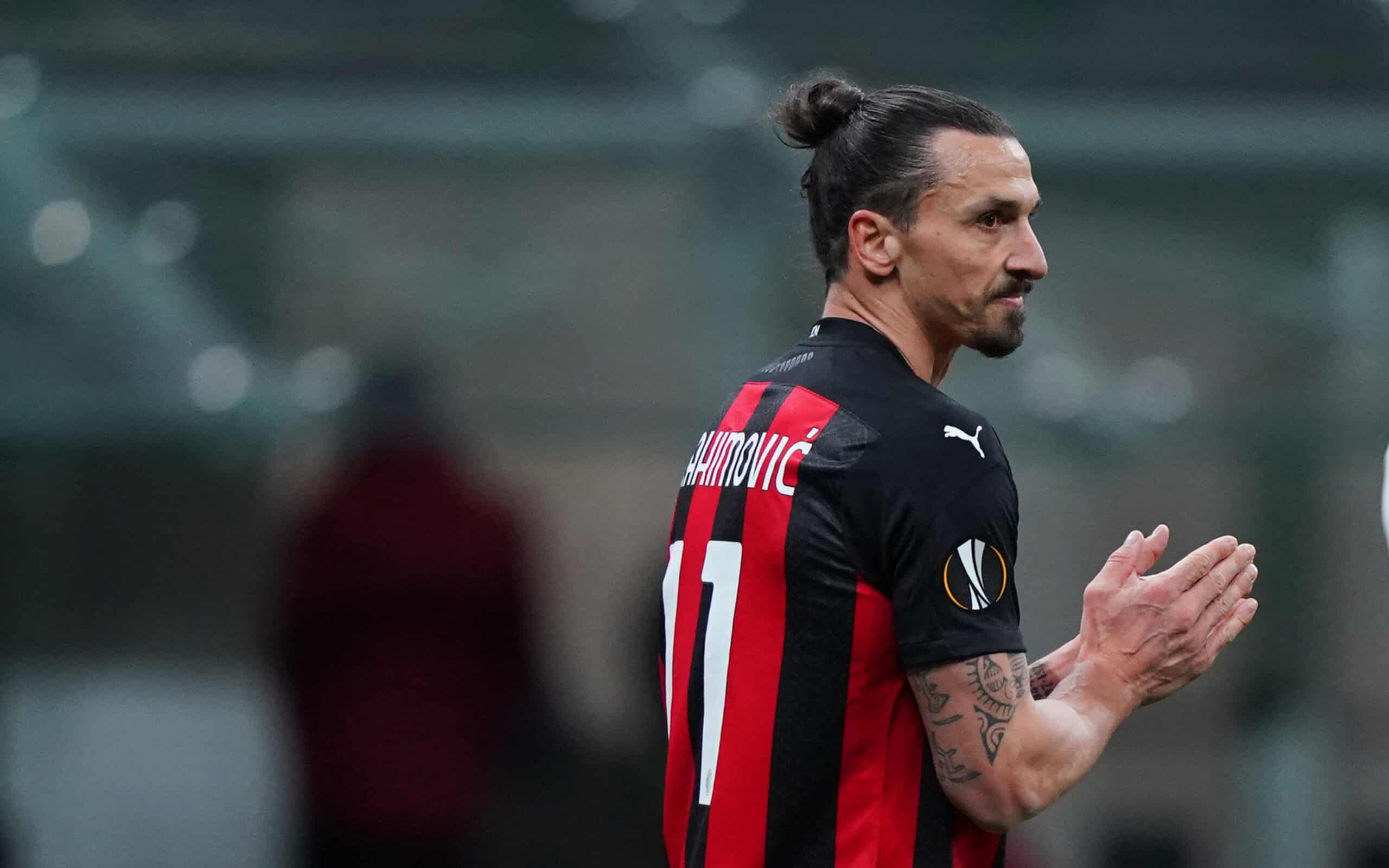
Zlatan Ibrahimovic
Serie A to La Liga to Ligue 1 to Premier League
Zlatan Ibrahimovic played for some of the biggest clubs in the world during his lengthy playing career, which started at the age of 17 and went all the way up to after his 41st birthday. The top five league he spent the most time in was Serie A, where he represented Juventus, Inter and AC Milan.
Ibrahimovic was blessed with supreme natural talent and a sizable frame, but his time in Serie A helped him gain a more intimate tactical understanding of the game. However, he struggled to adjust to life at Barcelona, where he perhaps did not quite have the technical subtlety to thrive in a team coached by Pep Guardiola.
Ibrahimovic bossed Ligue 1 during his time at Paris Saint-Germain, who dominated virtually every domestic game they played due to their financial advantages. He was also successful in the Premier League with Manchester United, despite Ibrahimovic’s declining mobility at that point.
Robert Lewandowski
Bundesliga to La Liga
Robert Lewandowski has not finished his career yet, but he is already one of the greatest centre-forwards in European football history. He announced himself as a star during a four-year spell at Borussia Dortmund, while the Poland international took his game to another level at Bayern Munich.
Lewandowski spent a total of 12 years in the Bundesliga. He developed his finishing ability at Dortmund, but he also impressed with his ability and willingness to lead the press for Jurgen Klopp’s side. His athleticism was on display at both Dortmund and Bayern, as Lewandowski shone in the transition-heavy Bundesliga.
Lewandowski’s switch to Barcelona came at the perfect time. He was almost 34 when he moved to La Liga, so the Pole was no longer able to cover as much ground as before. That has not mattered at Barcelona, whose possession-based style required a striker who could link the play and carry a threat inside the penalty box.
Kevin De Bruyne
Bundesliga to Premier League to Serie A
Very occasionally, a player is so good in many different ways that he does not need to make too many alterations to his game when changing leagues. Step forward Kevin De Bruyne, who showed many of the same qualities in the Premier League as he did in the Bundesliga.
De Bruyne’s first taste of a top five European league was England’s, but he struggled to make the breakthrough at Chelsea. After a loan spell with Werder Bremen, the Belgium international moved to the Bundesliga on a permanent basis with Wolfsburg. He was magnificent with the Wolves, catching the eye with his powerful ball-carrying and creative passing.
De Bruyne then established himself as one of the best players of his generation at Manchester City, where he combined lung-busting, box-to-box runs with pinpoint crossing, incisive distribution and an eye for goal. De Bruyne in his pomp was a complete footballer, so playing his natural game was enough to succeed no matter what league he was playing in. It will be fascinating to see how he does with Napoli in Serie A.
Angel Di Maria
La Liga to Premier League to Ligue 1 to Serie A
Angel Di Maria has had a terrific career, winning the World Cup with Argentina as well as numerous trophies at club level including the Champions League. An adaptable, smart footballer who played in various different roles, Di Maria was an underrated part of the Real Madrid team that were crowned European champions in 2014.
The Argentine failed to make the grade at Manchester United, however. There were off-field issues that made it difficult for Di Maria to settle in England, and United were not in the best state back then, but the attacker also struggled to adapt to the quicker speed of play and heightened intensity of the Premier League.
Di Maria was much more effective in Ligue 1, although it must be said that the French league is less competitive from top to bottom than England’s top tier. His time in Serie A with Juventus was disrupted by a myriad of injury issues.
Jadon Sancho
Bundesliga to Premier League
Jadon Sancho had the world at his feet in the summer of 2021. He was coming off the back of a third successful season as a key part of the Borussia Dortmund team. In 2019/20 he scored 20 goals in all competitions, followed by 17 in 2020/21. Sancho was one of the hottest properties around.
Manchester United won the race for his signature in 2021, splashing out £73m on the England international. Unfortunately for the Red Devils, it was not money well spent. Sancho has made little impact on the Premier League, both with United and during a loan spell at Chelsea. His best football in the last few years came in 2023/24, when he was temporarily sent back to Dortmund.
Sancho’s wing play was perfectly suited to the Bundesliga, where his ball control, manipulation of space and sound decision-making helped him to rack up the goals and assists. In the Premier League, a relative lack of pace has counted against him.
Arturo Vidal
Bundesliga to Serie A to Bundesliga to La Liga
Arturo Vidal was an all-action midfielder during the prime of his career. He was adept at getting in the faces of opponents and winning possession back for his team, then driving forward with the ball at his feet. He was an important part of a memorably complementary midfield at Juventus alongside Paul Pogba and Andrea Pirlo, with Vidal improving his tactical understanding in Serie A.
After Juventus, he joined Bayern Munich in 2015. Vidal had already spent four years at Bayer Leverkusen, so he already knew the Bundesliga well. It was probably the league that best suited his style given the end-to-end nature of many matches in Germany’s top division.
Vidal had a two-year spell at Barcelona between 2018 and 2020. It was not the best tactical fit. La Liga teams tend to play at a slower tempo, with an emphasis on technique and possession. That is not really Vidal’s game, and although he did a decent job at Barcelona, it was not the ideal environment for him.