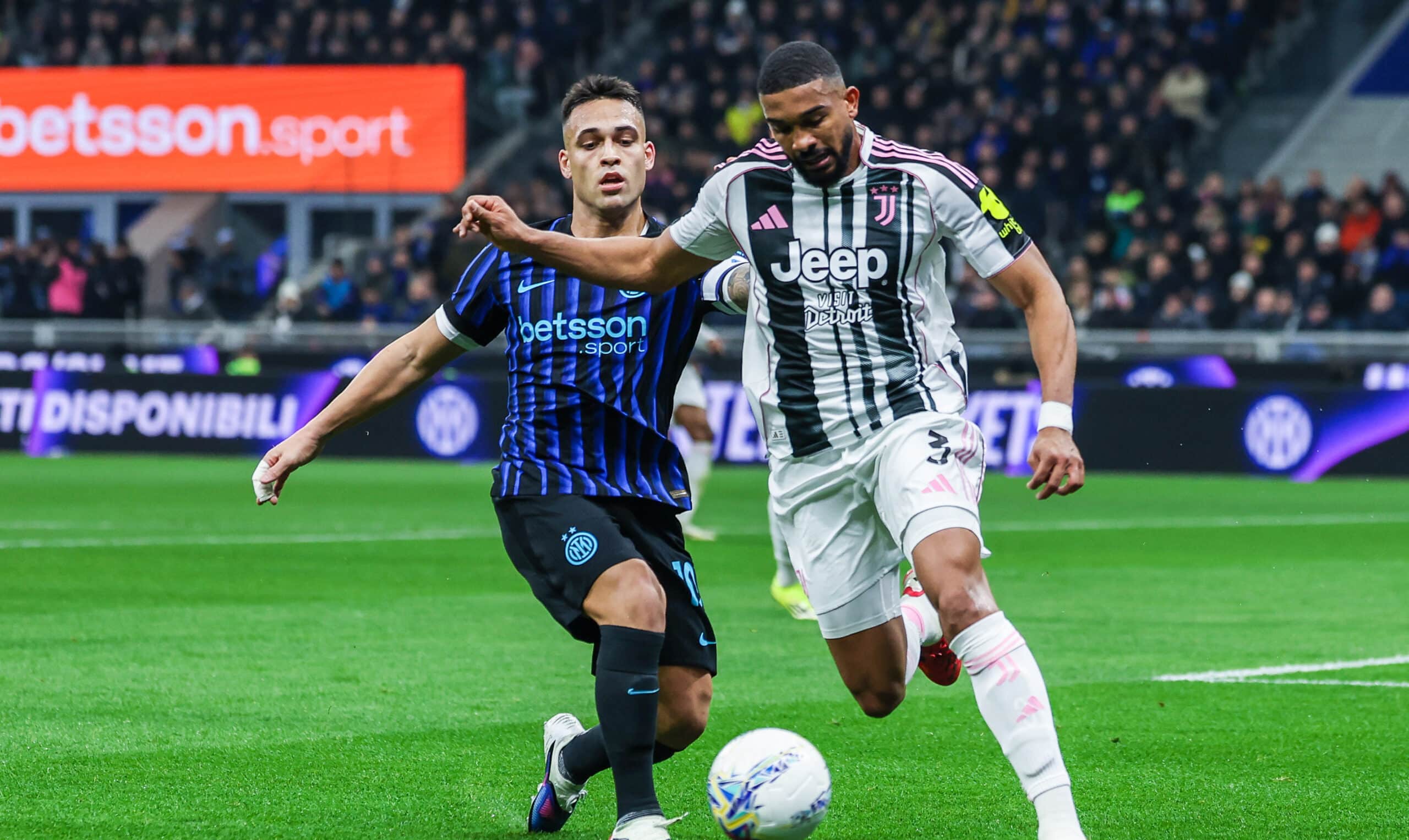

The name says it all, and it needs no translation: the Derby d’Italia. That moniker highlights just how significant the shared enmity between Inter and Juventus is. This is not just about two sets of supporters that do not like each other. It is also a twice-yearly meeting of Italy’s two biggest footballing powers.
In this article we will lift the lid on the Inter-Juventus rivalry, looking at the historic background, classic clashes and the rich narratives that have shaped it over the years. From battles on the pitch to battles in the courtroom, this is a grudge match that runs deeper than most.
Roots of the Rivalry
Juventus were founded in 1897, making them the second-oldest Italian club still in existence today. They took part in the 1900 Italian Football Championship, the third edition of the country’s first nationwide tournament, although back then no teams from Italy’s centre or south were involved. They won their first title in 1904/05, topping a three-team group ahead of Genoa and US Milanese.
Inter were born soon after, in 1908. The club’s full name is Football Club Internazionale Milano, which reveals how it came into being. At the time there was a split inside Milan Football and Cricket Club, which would become AC Milan. Some members wanted an Italian-only side, while others pushed for a club open to foreigners as well.
The first group got their way, forcing the exit of those who favoured a more inclusive approach. The departees decided to form their own club instead, naming it ‘Internazionale’ to make clear that their outfit was not exclusively for Italians.
Juventus (Turin) and Inter (Milan) are clubs from the two most important cities in northern Italy, so perhaps a rivalry between them was inevitable. However, the Derby D’Italia did not really get going until a few decades later. While there were a few seasons in the 1930s when Juventus won the league and Inter came second, it was only in the 1950s when relations between the two clubs started to become strained.
That was the decade in which Juventus, Inter and AC Milan, the three modern-day powerhouses of the Italian game, really established themselves as the teams to beat. Between 1950 and 1963, there was only one occasion in which a side other than the big three won the scudetto (Fiorentina in 1955/56). In the 14 campaigns spanning that period, Juventus, Inter and AC Milan all finished in the top three six times.
The question to ask now is: why did Inter vs Juventus become the Derby d’Italia? Why not AC Milan vs Juventus, or AC Milan vs Inter? The Milanese duo do indeed share a rivalry of their own, but is a more local affair than Inter vs Juventus. To answer that question, we have to look at an incident at the start of the 1960s, as well as the opinion of an influential Italian sports writer.
Narratives and Characters
In April 1961, Juventus hosted Inter in a crunch clash. Both teams were in contention for the title along with AC Milan. With 31 minutes on the clock and the score locked at 0-0, the referee Carlo Gambarotta was forced to abandon the match after Juve fans invaded the pitch at the Stadio Comunale. Just over a week later, Lega Calcio, which administered the top two divisions of Italian football, awarded Inter a 2-0 victory.
But that was not the end of the drama. Juventus felt hard done by and they duly launched an appeal. The case was taken up by the FIGC, Italy’s football federation, and they ordered the game to be replayed. Inter were outraged, but there was nothing more they could do. The match was to be held again on June 10.
Two individuals were at the heart of this battle. One was Angelo Moratti, an oil tycoon who owned Inter between 1955 and 1968. Moratti felt Juventus were the club of the Italian establishment, exemplified by the Agnelli family that ran the Bianconeri.
The Agnellis founded Fiat at the turn of the 20th century and took charge of Juventus in 1923. A member of the family, Umberto Agnelli, was the president of the FIGC at the time of the contentious 1961 ruling, despite also holding a key decision-making role at Juventus. Moratti accused Juve and the FIGS of conspiring against Inter.
Furious at the decision to overrule Lega Calcio, Moratti instructed Inter manager Helenio Herrera to play the youth team against Juventus in the rearranged game. Herrera followed the orders from above and Inter lost 9-1 in the final match of a season which ended with Juve as champions.
A few years later, in 1967, the football journalist Gianni Brera wrote that Inter vs Juventus was the Derby d’Italia. That was in part because they were the country’s two most successful clubs at the time, but it also reflected the growing animosity between the pair. From that point on, this was seen as the biggest fixture in the Italian game.
Fan and Club Identity
Juventus are Italy’s most well-supported club. They have a national identity in the way that most other sides do not. Indeed, although Juventus have always been based in Turin, their name alone does not tie them to that city. Much to the chagrin of those who follow local teams, Juventus are well supported in the south of the country as well as in their Piedmont stronghold.
Inter also have fans throughout the peninsula, although a 2015 survey conducted by Demos-Coop and La Repubblica suggested that only 17 percent of Italians support the Nerazzurri, compared to 35 percent who follow Juventus. Juve and Inter make up the top two in that list, ahead of AC Milan, Napoli and Roma, further underlining their status as Italy’s most significant powers.
Defining Derby Moments
Juventus and Inter have both enjoyed spells of dominance down the decades. Juventus reigned supreme in the first half of the 1930s, while the Grande Inter team of the aforementioned Helenio Herrera ruled for much of the 1960s, when they won three league titles and two European Cups.
Juventus got back on top in the 1970s and 1980s, claiming their first European Cup in 1985. They pulled level with Inter on that measure in 1996, but the Nerazzurri’s Champions League success under Jose Mourinho in 2010 saw them retake their lead over Juve as they were crowned kings of the continent for a third time.
However, the Bianconeri still boast a substantial advantage over Inter in terms of scudetti won: 36 to 20 as of February 2026. And at the time of writing, they have won 111 official editions of the Derby d’Italia versus 71 victories for Inter.
The defining derby moment of recent times was the Calciopoli scandal of the mid-2000s. Several clubs were found guilty of illegally influencing the selection of referees, with Juventus ruled to be most culpable. They were stripped of the 2004/05 Serie A title, while the 2005/06 scudetto was handed to Inter, who had finished as runners-up.
Juve were also relegated to Serie B, and although they returned at the first time of asking, the effects of that demotion allowed Inter to dominate Serie A over the next few years.
The Rivalry Today
After Inter’s spell of dominance in the second half of the 2000s, Juventus were Italy’s preeminent team for most of the 2010s. In the current decade Juve, Milan, Napoli have all finished top of the table, but Inter are the only side to have lifted the trophy twice since 2020 - and as things stand, they are clear favourites to triumph in 2025/26 too.
Juventus and Inter both joined the failed European Super League project, with the former particularly strong advocates for it. Indeed, whereas Inter were quick to withdraw their candidacy in April 2021 after an unprecedented level of fan backlash right across the continent, Juventus stuck to their guns until June 2024. Their unpopular position on such a controversial topic did not do anything to alter their status as Italy’s most polarising club.
The Derby d’Italia continues to attract the interest of football fans across the world, but what of the future? Truthfully, it is hard to envisage a time where Inter and Juventus are not diametrically opposed to one another. Even when the two teams are not in direct competition in any given season, this fixture always matters - and that is unlikely to change in the short-term, medium-term or even the long-term future.