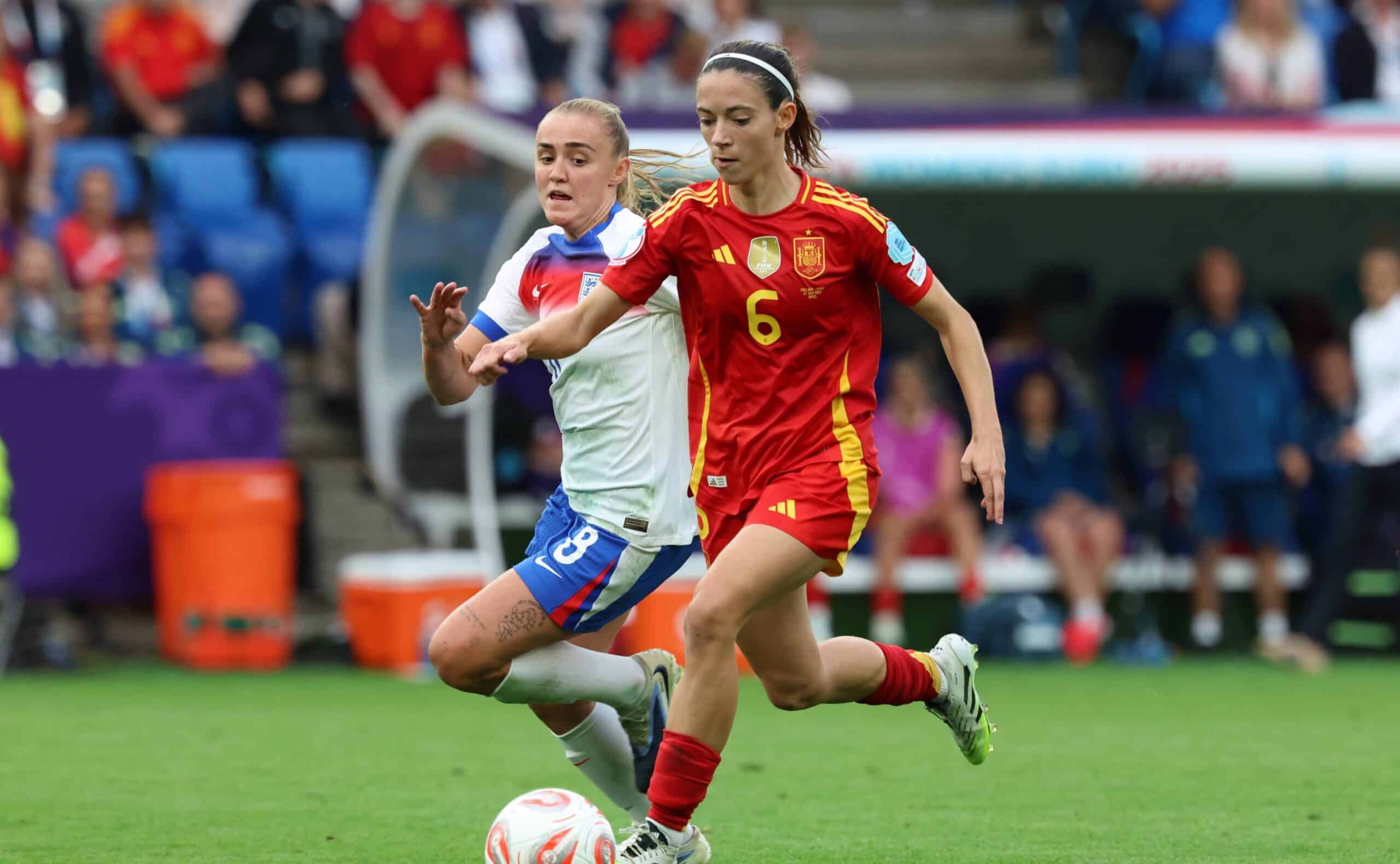

Women’s football has grown immensely in recent years and there is more development to come. For so long female footballers were marginalised in the world’s most popular sport and the women’s game has had to overcome numerous barriers to get to the position it is today.
In this article we will take a deep dive into women’s football, looking at the history of the game and celebrating its progress up to now. There are still challenges, however, and we have examined some of them towards the end of this piece.
The Early Years of Women’s Football
Football has multiple different origin stories of varying authenticity, but it is a known fact that the sport was codified in Britain in the 1860s. The Football Association was formed in a pub in London and the Laws of the Game were created soon after. This was a seismic moment to which today’s global behemoth can be traced back.
Back then, though, it was simply assumed that men were the only possible participants. There were no provisions for a women’s game as conservative and retrograde attitudes contributed to the idea that football was for men and men only. This is despite the fact that there is evidence of women playing something similar to football as far back as 25 CE.
Yet there was some progress over the next few decades. What is thought to be the first ever official women’s match took place in Scotland in 1892. Three years later there was an organised game for women in England.
In that country, the women’s game really took off during the First World War. With many young men away fighting, women replaced them on the football field. Dick, Kerr Ladies, a women’s club founded in 1917, proved to be particularly influential. Their games are said to have attracted up to 53,000 fans at their peak. This proves there was a genuine interest in watching women’s football.
In 1920 Dick, Kerr Ladies faced a French team in what may well have been the first major international women’s fixture. But a spanner was soon thrown into the works. In the view of the (exclusively male) leadership at the Football Association, women’s football was becoming too popular.
Women’s football was outlawed in England in 1921, with the Football Association ruling that the game was inherently masculine and thus unsuitable for female players. The game was also banned in other countries at different times, including France, Spain, the Soviet Union and West Germany.
It was not just a European thing either: the likes of Nigeria and Brazil denied women the right to play football too, while other nations did not even need to legislate for a ban since The Brazilian authorities decreed that the sport was "incompatible with the conditions of their (women’s) nature”. Needless to say, this significantly stunted the development of the women’s game all over the globe. Without those widespread bans, who knows where women’s football would be now.
Revival and Progress From 1970s to 2010s
By the late 1960s and 1970s, the policy of denying women the right to play football was no longer sustainable. In England, the Women’s Football Association came into being in 1969 (although it was not until the following year that the draconian ban was finally lifted). Around the same time women’s leagues were set up in other countries, with Italy leading the way in 1968.
Perhaps the first major breakthrough in the revival of the women’s game was the staging of two unofficial World Cups in 1970 and 1971. Neither tournament had the backing of FIFA, but both events - organised by the Federation of Independent European Female Football - were a success.
The first tournament featured seven sides: the hosts Italy, Denmark, England, Austria, Mexico, West Germany and Switzerland. The Danes were crowned champions after beating Italy 2-0 in the final, with crowds for the games reaching as high as 30,0000. Again, these figures demonstrate there was an appetite for the women’s game, no matter what the authorities thought.
Only six teams made it to the 1971 edition, which was held in Mexico. Alongside the hosts were Denmark, Italy, Argentina, England and France. Incredibly, 110,000 supporters crammed into the iconic Estadio Azteca for the final, which saw Denmark retain the trophy with a confident 3-0 victory over Mexico.
It was not all good news, however. Take England’s team for the 1971 World Cup. On what should have been the proudest days of their lives, the players had to hide their participation for fear of punishment back home. The Football Association of England did not want to anger FIFA, which had not sanctioned the tournament, and so they declared any players representing the country in Mexico would be banned from the game.
It is worth noting that before Europe launched its own continental competition for women, the Asian Football Confederation set up the Women’s Asian Cup in 1975. Six teams took part in the event held in Hong Kong, with New Zealand beating Thailand 3-1 in the final.
Next came the Mundialito, or the international Ladies Football Festival to give it its official name. The first edition took place in 1981 in Japan, before Italy held the next four tournaments up until 1988. Italy won three of those competitions and England triumphed in two.
FIFA finally got involved in 1988 when it organised the Women's Invitation Tournament. Held in China, it was won by Norway courtesy of a victory over Sweden in the final. China then hosted the first official Women’s World Cup three years later. That event was won by the United States of America, whose women team was only founded six years earlier. The USA beat Norway in the final in front of 63,000 supporters in Guangzhou.
The Women’s World Cup has been held every four years ever since. At the time of writing the USA are the most successful side in the history of the competition, having lifted the trophy on four occasions. Germany are two-time champions, while Norway, Japan and Spain have each won the World Cup once.
In 1996, a women’s football tournament was added to the Olympics schedule. Unlike the men’s version, which requires national teams to select all but three players who are under the age of 23 at the start of the year, the women’s event is open to all. The USA has also dominated the Olympics, winning four gold medals ahead of Paris 2024.
The Women’s Game Today
The women’s game has never been bigger or better than it is today. There are now professional leagues in the USA, England, Australia, France, Spain and Sweden, with more nations set to follow in the coming years. Footballers from other countries can make a living from the game by plying their trade in one of the leagues listed above.
The UEFA Women’s Champions League, which only came into existence in its current form in 2009, is now one of the most highly anticipated annual football events in Europe. In the 2023/24 edition, which was won by Barcelona, attendances in excess of 25,000 were not exceptional. The final in Bilbao drew a crowd of more than 50,000 people.
That was not a one-off. The 50,000-crowd barrier has been broken on several occasions in domestic leagues in England, Mexico and Spain. A total of 77,390 fans watched Chelsea vs Manchester United in the 2023 FA Cup final in England. In 2022 a Champions League record 91,648 spectators saw Barcelona beat Wolfsburg 5-1.
According to Deloitte, women’s football is likely to generate a worldwide revenue of €500 million in 2024. That statistic alone shows how much progress is being made. Meanwhile, the average salary in England’s Women’s Super League is £47,000. That is nothing like the riches on offer to the world’s best male players, but it is a tidy pay packet nonetheless.
“Significant levels of financial growth were recorded in the 2022-23 season across the top tiers of European women’s football,” said Amy Clarke of Deloitte. “A rise in the number of women’s matches playing at clubs’ main stadiums boosted matchday revenues, and increased viewership and individual partnerships helped to accelerate the commercialisation of the game.”
The most recent edition of the Women’s World Cup featured 32 teams, the same number as the previous men’s tournament. All four corners of the planet were represented: in addition to familiar faces such as the USA, Spain, England and France, there were appearances from Morocco, Zambia, Haiti, Vietnam and the Philippines. Yet there is still plenty of room for expansion to other countries who have only recently embraced the game.
At the Paris Olympics in 2024, the women’s football tournament drew considerable interest, including from those who may not have followed the sport before. That bodes well for the years ahead.
The Future of Women’s Football
Where does women’s football go from here? In truth, it is hard to see the game attracting as many eyeballs as its male equivalent, in large part because the latter had a decades-long headstart when the former was banned. But women’s football is getting bigger and bigger, and it is difficult to imagine that trend reversing.
Of course, challenges remain. The women’s game is still not as big of a business as the men’s game and female players are consequently paid significantly less than their male counterparts. Even some of the world’s biggest clubs do not adequately invest in their women’s teams. Manchester United did not even have one until 2018.
Misogyny is not as potent as it once was, but nor has it been eradicated from football (or, indeed, wider society). In this very century, it was proposed that women should wear tighter shorts to attract more fans. The brains behind that idea? One Sepp Blatter, the then-president of FIFA.
There are issues on the field too. Research shows that female footballers are eight times more likely than male players to suffer an injury to their anterior cruciate ligament, which usually sidelines victims for a minimum of eight months.
There are biological reasons that go some way towards explaining this discrepancy, but they are not the only factor. For instance, another issue is that the boots worn by female players are usually not designed specifically for them. Instead, they are in effect men’s boots shrunk down to size. Similarly, relatively few studies into the bodies of female footballers have been conducted with regards to injury prevention and treatment.
Overall, though, the women’s game has come a long way in the last three decades and the direction of travel is broadly positive. Women’s football still has hurdles to overcome, but it is not about to be banned any time soon. That is good news for anyone who cares about the beautiful game.