
In 2026, many associate German football with Bayern Munich fighting for the Champions League, Harry Kane scoring for fun, and Manuel Neuer pouring beer over Michael Olise’s head, but the Bundesliga is so much more than the star players on the pitch. Unlike the vast majority of other top European leagues, the German top division is run by the fans, for the fans, with the fans. In a world of television money, European Super League breakaways, and rising ticket costs, the Bundesliga continues to fight to keep a pure love of football at the heart of their domestic league.
Let’s take a look at five reasons why Bundesliga supporter culture creates the best atmosphere in Europe.
The 50+1 rule puts the power in the hands of Bundesliga fans
One of the Bundesliga’s most iconic, protective, and respected rulings comes in the form of the 1998 50+1 rule. In essence, this German footballing law means that fans always retain a majority ownership stake in their own clubs. Commercial investors are only allowed to purchase a maximum 49% stake in a club, with a few exceptions. The likes of RB Leipzig, Bayer Leverkusen, and Wolfsburg were all founded before 1998 by staff from Red Bull, Bayer AG, and Volkswagen, respectively, which circumvents the 50+1 ruling. However, in most cases, German clubs are protected against becoming soulless money-printing machines by keeping their futures safely in the hands of those who love them most – the loyal supporters.
Bundesliga ticket pricing keeps fans in the stands
In the 2025/26 Premier League season, the most expensive season tickets on offer came at Craven Cottage (Fulham) and the Tottenham Hotspur Stadium - £3,084 and £2,367, respectively. Both teams finished in the bottom half of the table. The average ticket prices at Tottenham, Arsenal, and Man City were £124, £91, and £84 per game. In the Bundesliga, the average 2025/26 ticket cost just €37 (£32) for seated and €12 (£10) for standing. The combination of safe standing, affordable tickets, and alcohol allowed in seats not only creates a raucous atmosphere, but also removes the risk of pricing out the working class from what has always been a traditionally working-class sport.
Bundesliga fans keep greedy profit-makers in check
Many claim that supporters no longer have any power in modern football, particularly after they were referred to as ‘legacy fans’ during the infamous Super League movement in 2021. It is no coincidence that Bayern Munich, Borussia Dortmund, and RB Leipzig rejected that particular proposal, despite 12 other big-name clubs signing on.
Back in 2018, it was announced that Bundesliga fans had been successful in their protests against Monday night fixtures, and a change would be made from the 2021/22 season in line with the new TV contract. Supporters believed that the move to a Monday night schedule, which has long been seen in the English Premier League, was nothing more than a money-grabbing move from broadcasters, at the cost of the fans. Travelling to an away match on a Monday night was near impossible for many, especially when it came to getting back home in time for work on Tuesday. As such, fans voted with their feet by attending protests, holding up banners at games, and even showing up 15 minutes late to Monday night games to ensure the stadiums looked empty. In the end, the fans (and football) won.
Community spirit is the beating heart of the Bundesliga
Because Bundesliga fans have such a prominent influence on how their clubs are run, we often see a more personal push for community projects in German football. This includes working closely with clubs to create inclusive frameworks to fight against homophobia, transphobia, racism, and misogyny.
- St Pauli have a long history of pushing for social activism, including food/clothing drives for refugees, anti-racism education campaigns, homelessness charity fundraising, and financing community spaces around the stadium.
- SC Freiburg have bicycle-to-the-match campaigns to help the environment, volunteers turn up to push for recycling on matchdays, and fan groups have promoted lower-carbon travel to away days.
- When FC Union Berlin renovated their stadium back in 2008/09, 2,000+ fans showed up to volunteer at the Stadion An der Alten Forsterei. That included 140,000 hours of labour, including painting, landscaping, construction, and more. All to help their club save some money.
- At Werder Bremen, fans organise food bank collections, inclusion programs for people with disabilities, charity football matches, and school partnerships through the official supporters’ clubs.
- At Mainz 05, fans even hold neighbourhood clean-up days!
Borussia Dortmund’s Yellow Wall is German football culture personified
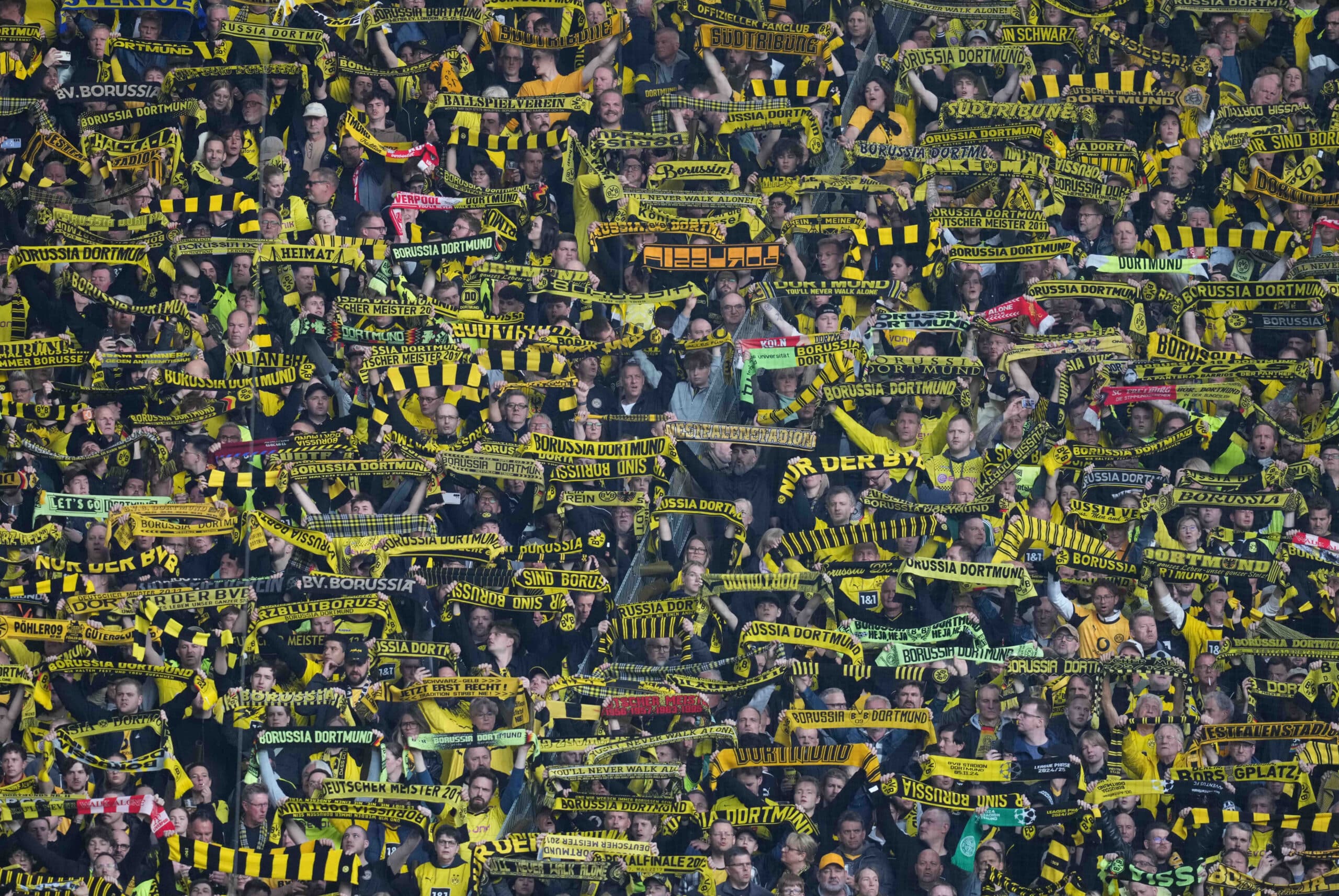
There is no more famous football fan experience than standing in the iconic Yellow Wall at Borussia Dortmund. 328 feet wide, 131 feet tall, and 24,454 fans strong, it creates one of the loudest and most intimidating in-stadium atmospheres in European football.
Jamie Carragher, who spent his career playing in front of Liverpool’s famous Kop, said it was ‘one of the best experiences of my life’. He added: “It might explain why I might be slurring my words because I've had about eight pints in the Yellow Wall! I've got a new family, a family of friends, we all look after each other.”
Jürgen Klopp said: "When you enter the stadium and look to the left, it’s like looking into a big yellow mountain. It is overwhelming. You walk out, and you look to the left, and it's breathing. There is nothing like it in the world of football."
Neven Subotić: "When the South Stand sings, you feel the ground shake. It carries you when your legs are empty.”
Mats Hummels: "It's the best place in the world to play football. When you turn around and see the South Stand before the game, it gives you an energy boost that you can't get anywhere else."
While the Yellow Wall itself may be unique, the atmosphere does not start and end with Signal Iduna Park. Just shut your eyes and pick any number of the Bundesliga’s famous German stadiums! Whether you visit Bayern Munich’s Allianz Arena, St Pauli’s Millerntor-Stadion, Schalke’s Veltins-Arena, or Union Berlin’s Stadion An der Alten Försterei, you are guaranteed to be met with 90 minutes of singing, chanting, and drinking. In Germany, the fans are the heartbeat of the game, and you can feel that pulsating through the stands.
Conclusion: Why does Bundesliga fan culture make for the best football atmosphere in Europe?
The Bundesliga is a bubbling melting pot of all the things that make football great. While the financial giant – the Premier League – has sold off tradition in favour of bigger TV deals, higher gate receipts, and fancy stadiums that host everything from boxing to Beyoncé, the Bundesliga has stayed true to its roots. Football is constantly evolving and growing, but German football remains rooted in its core values - affordability, tradition, and having a damn good time!