
Aside from the Winter Olympics, the IIHF World Championship is the pinnacle of international ice hockey.
So to represent your country and win a medal at this prestigious tournament that was first contested more than a century ago… what a feeling that must be.
Here’s an extraordinary statistic: 15 players have won eleven or more medals at the Worlds. They were all from the Soviet Union or Czechia – a nod to the dominance of those hockey powerhouses of yesteryear.
Let’s shine a light on those individuals, and some others, who have reached elite levels and defined eras for more than a decade.
Why World Championship Medals Matter
As noted, winning a World Championship medal is vindication of the hard work, the sacrifices and the mountains of pressure that being a successful international athlete requires.
It secures a place in hockey folklore, too: the Worlds were first established back in 1920, remember, and have played host to some of the finest skaters the sport has ever seen.
The fact that the World Championship is held annually means that players that maintain peak physical and mental conditioning, and whose skills remain consistently sharp, have multiple opportunities to win IIHF medals during their career.
Most players, however, will never get their hands on gold, silver or bronze… one of the reasons that multiple medallists never take their success for granted.
And winning for your country: what more motivation could anyone need to train hard, continually improve and maximize their longevity?
What It Takes to Win Repeatedly at International Level
So how do you rack up multiple IIHF World Championship medals?
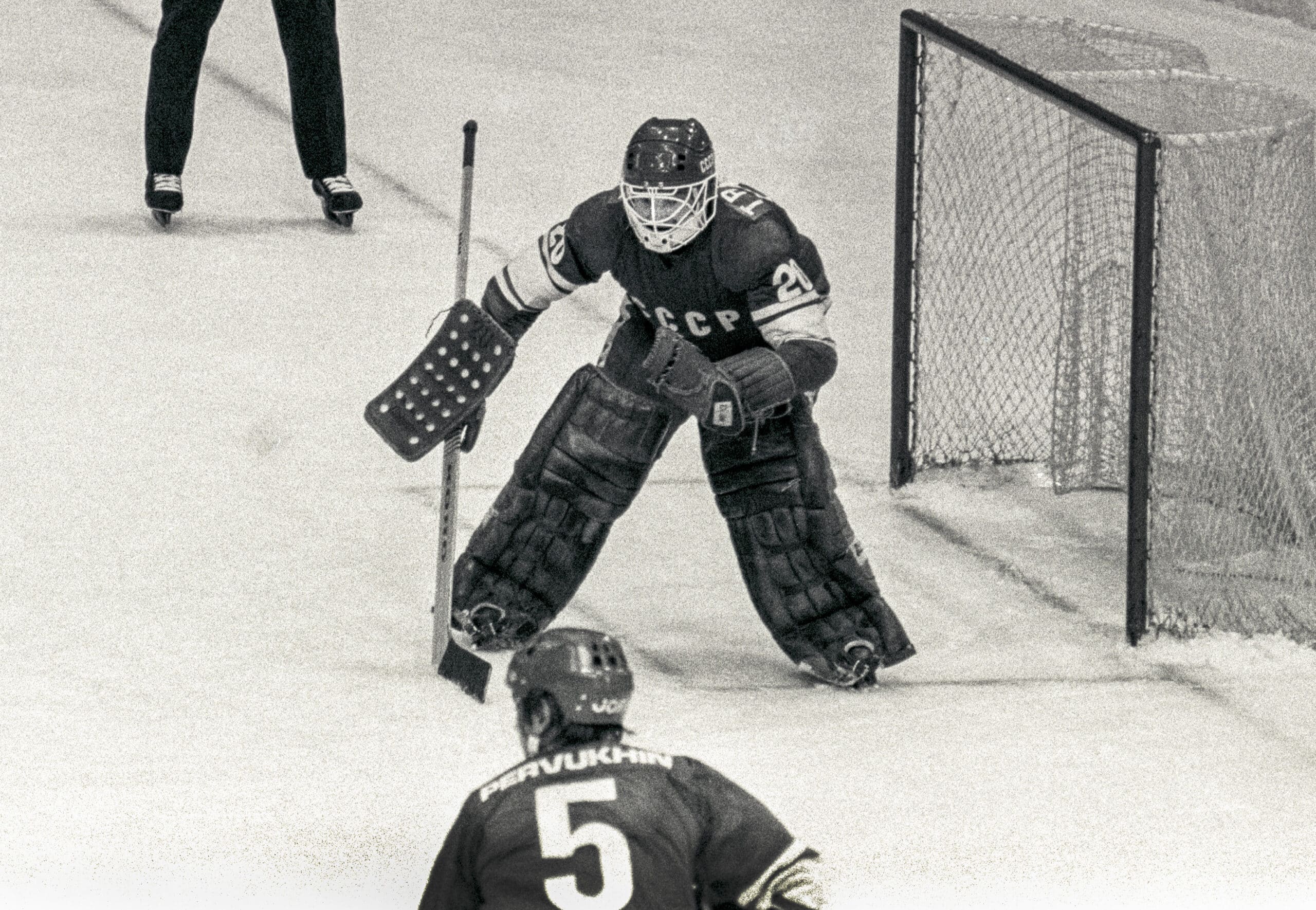
Generally, it pays to be an attacker or defender. Indeed, the great Vladislav Tretiak is the only goaltender to have won ten or more IIHF medals – ultimately, the Soviet Union goalie earned 13… ten of which were gold during his country’s absolute dominance of the 1970s.
Tretiak was aged just 18 when he won his first IIHF medal, and that early start no doubt helped his enduring brilliance – by the time he won his final Worlds medal in 1983, the hall of famer was still only 31 years old.
There’s no doubt that Tretiak was an anomaly. Of the 15 players that have won eleven medals or more at the World Championship, nine were forwards and five were defenders – perhaps offensive players are able to improve with age as they gather experience and nous around the opposition net?
Naturally, being born in the right country also helps. In more than a century of the IIHF competition, only 12 nations have won a medal of any colour – only five of those, namely Canada, the USA, Sweden, Czechia and the Soviet Union/Russia, have medalled on 20 or more occasions.
Players Who Defined Medal-Winning Eras
The first major dynasty at the World Championship was Canada, who – thanks to the high quality of their domestic teams – were able to send all-star rosters to the tournament.
By 1961, they were collecting their 19th gold medal; the Canadians have *only* won nine more golds since as the rest of the leading hockey-playing nations have caught up with their brilliance.
Although not the most decorated hockey players in terms of pure medal haul, those early Canadian teams featured trailblazers like Henry Watson, who scored a staggering 37 goals in five games at the 1924 Winter Olympics/World Championship, plus those who starred in both the 1950 Worlds win and the gold medal success at the 1952 Winter Olympics in Norway: Bob Watt, Al Purvis, Don Gauf and John Davies.
By the end of that period of dominance, Canada could also call upon the likes of Connie Broden – the first player to win the World Championship and Stanley Cup in the same year (1958) – and defensive ace Jean Lamirande, who struck gold in both 1958 and 1959.
A new decade and a new dominant force at the IIHF World Championship: the Soviet Union.
Many of the most prolific ice hockey medal leaders were part of this extraordinary, which continued to evolve over the next few decades and ultimately win 20 golds over the next 25 years from 1963 onwards.
We’ve already mentioned the incomparable Tretiak, but others also deserve a mention: Alexander Ragulin claimed ten gold medals and 12 in all, while Alexander Maltsev was a key part of the Soviet team for more than a decade – winning 12 medals over the course of 14 years, including nine golds.
And another nation that was forced to watch on as the Soviets dominated the World Championships was Czechia, who won four silver medals in the 1960s, three golds and four silvers in the seventies and a gold, two silvers and three bronze in the eighties.
Without the Soviet monopoly, you wonder how many gold medals the likes of Jiri Holik would have won… instead, he could console himself with landing 13 IIHF medals in all, which is tied with Tretiak as the best return in World Championship history.
As the Soviet Union was broken up in the early 1990s, other countries had the opportunity to establish themselves as a force at the Worlds. Sweden won three golds, three silvers and two bronze in the decade, with Jonas Bergqvist a key figure – he ended his career with seven World Championship medals in all.
As the new millennium dawned, the parity in international hockey was such that it had become rare indeed for an individual country to truly dominate on the world stage.
From the year 2000 to 2016, only four nations were able to win back-to-back editions of the IIHF showpiece: Czechia (2000-01), Canada (2003-04 and 2015-16) and Russia (2008-09).
For the Canadians, names like Eric Brewer, Shane Doan and Dany Heatley emerged in this era – the latter duo winning two golds and three silvers in a period of renewed success for the World Championship’s original powerhouses.
Elsewhere, Alexander Ovechkin (nine medals) and David Vyborny (eight) were establishing themselves as World Championship kingpins, while it was a case of what might have been for Finland’s Ville Peltonen, who also won eight medals at the Worlds… but only one of them gold.
This new era is providing new opportunities to thrive on the grand stage. Between 2021 and 2025, no nation has successfully defended their world title and only one – Canada – has clinched gold more than once.
Germany, Switzerland and Latvia have emerged as medal contenders, while there’s been a great resurgence of interest from the United States in the World Championships – their victory at the 2025 event was their first gold since 1960.
Which players will emerge as IIHF superstars in this exciting contemporary era?
Longevity, Leadership and Tournament Experience
When talk turns to longevity in the World Championship, no discussion is complete without mention of Andres Ambuhl.
You want tournament experience? How does 151 games in the World Championship sound!? The Swiss is comfortably the holder of the record for the most appearances in the competition, notching 70 points in that span and helping his country to three silver medals.
Also a participant in five editions of the Winter Olympics, the pocket rocket – Ambuhl stands just 5ft 9in tall – was rightly inducted into the IIHF Hall of Fame this year.
Some 22 players have made 100 or more appearances at the World Championship. But how many of them have delivered 100 or more points?
The answer is just six, with five of those coming from the all-conquering Soviet Union team of the 1960s and 1970s. The iconic Boris Mikhailov was given the nickname ‘Velikiy Kapitan’, which literally translates as ‘great captain’. And boy, did he live up to the tag…
Captaining the Soviets to Winter Olympics and World Championship gold, Mikhailov racked up an outstanding 164 points – the most in tournament history – via 98 goals and 66 assists.
He had a range of incredible lieutenants in that time of course, including Maltsev, Vladimir Petrov and Valeri Kharlamov, who are the only other players to have scored 150 or more points in IIHF history.
Leadership can take many forms on the ice; it’s not just captains that lead the way. When the first players from the Soviet Union’s golden generation began to retire from hockey, a new breed came along to take their place.
And while Sergei Makarov wasn’t the administrative captain of the team, there is no doubt who led those great teams of the 1970s and 1980s. With 123 points delivered in a decade-long reign of terror, Makarov helped the Soviets to eight gold medals, a silver and two bronze.
Vladimir ‘The Fox’ Martinec was the captain of the Czechia team throughout the 1970s, earning his nickname for his smarts on the ice.
How many gold medals Martinec would have helped his country too in another era, one in which the Soviets weren’t the state funded powerhouse of international hockey, remains to be seen.
But even in this reality, Czechia won three golds, five silvers and three bronze medals with Martinec in their roster. And he cemented his place in the IIHF Hall of Fame by becoming the only non-Soviet to score 100 points in World Championship history – 109, to be exact, with 53 goals and 56 assists.
Some captains lead by word and some by action… some, meanwhile, achieve both. A nod to Roman Cervenka, who made his Czechia debut back in 2005 and is still playing international hockey to this game.
A captain of the team for much of his career, Cervenka holds the unique distinction of having delivered the most assists in the World Championship from a non-Soviet player.
A two-time IIHF gold medallist, Cervenka is also the leading scorer in the illustrious history of Czechia in the tournament.
Comparing Different Eras of International Hockey
Whether a question of infrastructure or political instability, the different eras of international hockey – especially the early years of the World Championship – have been dominated by nations with a distinct edge.
For many years, Canada was the premier hockey-playing country. They sent their best amateur teams to represent them at the World Championship – often playing against nations who had just taken their first steps into the sport.
The Canadians were simply better skaters, superior technicians, effective tacticians and had the experience of playing elite level hockey week in, week out.
Canada’s monopoly was only ended when hockey began to be taken more seriously in Europe. In the 1940s onwards, European nations started to invest more heavily in their infrastructure, producing better facilities, coaches and thus players as a result.
Emboldened by the Cold War, the Soviet Union became a global force in many different ways, with their love of hockey manifesting itself as total domination of the World Championship for decades.
In fact, you wonder if the union hadn’t been dissolved in the early 1990s, how many more IIHF medals would they have gone on to win?
Russia has since emerged from the Soviet Union as one of hockey’s ‘big six’, but none of that half-dozen has truly dominated like Canada and the Soviets did before them.
But maybe we’re heading towards a new North American dynasty. The USA and Canada have won three of the last five editions of the World Championship, with the pair also battling it out in the final of the Winter Olympics in 2026.
With more and more young and up-and-coming NHL pros representing their countries at the IIHF World Championship, maybe a new era is just about to begin…
What These Records Tell Us About Greatness
The international hockey records are a vital monument to the history of this fine tournament and sport as a whole.
Past trends do not predict future performance, of course, but it’s noteworthy that Canada and Russia remain amongst the true powers of international hockey to this day.
Greatness in sport is earned, not given. But the margins for success are finer than ever before, closing the gap between the competing nations and making the battle for medals even fiercer than ever before.
We can simultaneously appreciate the past, while speculating that the present and the future of the IIHF World Championship can take international hockey to an even higher stratosphere.